
Verizon and AT&T’s networks are about to get a notable upgrade as wireless carriers face a growing competitive threat from SpaceX’s Starlink Mobile.
Currently, Starlink Mobile provides direct-to-cell satellite connectivity through partnerships with mobile network operators in multiple countries. However, in recent months, SpaceX has been working to build a terrestrial wireless network for Starlink Mobile to complement its existing satellite connectivity.
SpaceX Chief Operating Officer Gwynne Shotwell said on an earnings call in August that she expects Starlink Mobile’s upcoming network to be able to “acquire quite a few” T-Mobile, Verizon, and AT&T customers.
SpaceX later announced in an October press release an agreement to acquire a nationwide portfolio of 800 MHz low-band wireless spectrum licenses. The company said the deal “will pave the way for Starlink Mobile to become a major mobile carrier in the US,” and it is currently awaiting approval from the Federal Communications Commission.
Verizon and AT&T are preparing to expand satellite coverage
As SpaceX moves quickly to turn Starlink Mobile into a major wireless carrier, Verizon and AT&T’s satellite partner, AST SpaceMobile, has revealed in a press release that it plans to provide “intermittent nationwide coverage” in “key markets,” including the U.S., by the end of 2026.
This means that Verizon and AT&T will be able to use AST SpaceMobile’s satellite network to extend their wireless coverage to areas beyond the reach of traditional cell towers, initially on an intermittent basis.
While AST SpaceMobile previously expected to have 45 of its BlueBird satellites in orbit by the end of 2026, it has now pushed that timeframe to mid-2027. The company said that deploying approximately 45 to 60 satellites would enable continuous coverage across the U.S. and other key markets.
Read more: T-Mobile pushes back on SpaceX’s bid to take its customers
Also, it expects to deploy more than 100 of these satellites between 2027 and 2028 under its existing launch agreements.
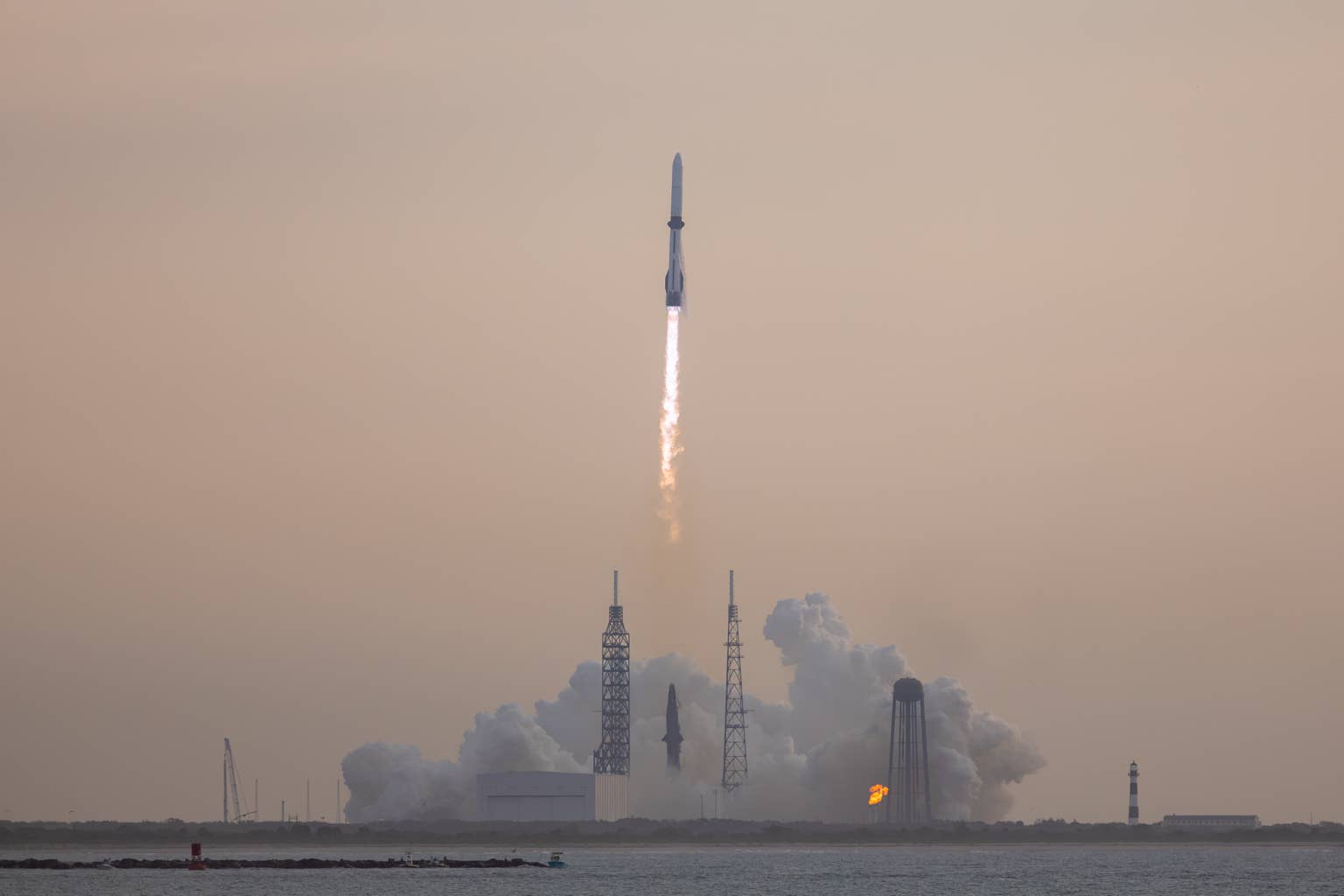
AST SpaceMobile currently relies on SpaceX and Blue Origin to deploy its satellites. However, AST SpaceMobile is building its own rocket, Blacklift, which is expected to begin launching satellites into orbit starting late 2028.
As the company prepares to provide intermittent coverage in the U.S. and other areas, AST SpaceMobile president Scott Wisniewski said on an earnings call on Nov. 9 that mobile operators will see “nationwide availability when a satellite is overhead.”
The company expects to begin beta testing its satellite service with customers of its mobile operator partners in early 2027. Wisniewski said that AST SpaceMobile believes approximately 25 satellites would be sufficient for those initial trials.
“We think that those beta trials are best with about 25 satellites, although there’s some flexibility there,” said Wisniewski. “But for us, our long-held target has been to light up that network for them, and that’s what we’re focused on right now with beta to follow shortly thereafter, early in the year.”
NurPhoto / Getty Images
Wireless carriers see growing consumer demand for satellite services
Once AST SpaceMobile’s service officially launches, Verizon and AT&T will be closer to catching up with T-Mobile, which has been offering T-Satellite, its direct-to-cell satellite service developed in partnership with SpaceX, to customers since July 2025.
Meanwhile, the three major U.S. wireless carriers are also working together to expand satellite connectivity. Verizon, AT&T, and T-Mobile launched a joint venture in October, which aims to expand satellite connectivity and use it to eliminate wireless coverage gaps across the country.
The agreement was first announced in May, and the carriers expect this move will expand customer choice in satellite services, which could put them in competition with Starlink.
More Telecom News:
- Spectrum faces new customer problem after Cox acquisition
- T-Mobile excludes 2 generous customer perks from new phone plans
- Comcast makes significant shift as customer losses mount
T-Mobile, AT&T, and Verizon’s recent moves to boost their satellite cellular service offerings come as consumers worldwide are willing to pay extra to access these services.
A survey from Viasat in 2025 found that 80% of consumers are interested in having satellite connectivity on their smartphones. Most consumers (67%) said they are interested in using this service for messaging and emergency/SOS capabilities.
Also, more than 60% are willing to pay extra for satellite-enabled mobile service, while 47% said they would even switch to a wireless carrier that offers it.
As consumer demand for these services grows, Omdia revealed in its Smartphone Satellite Direct-to-Device (D2D) Forecast in March that it expects global satellite direct-to-device services to reach 411 million monthly active users and generate $11.99 billion in revenue by 2030.
“The expansion of satellite constellations and coverage will allow more communication service providers to deliver ubiquitous connectivity by leveraging satellite D2D capabilities,” said Dario Talmesio, a telecom industry analyst and research director at Omdia, in a press release.
“D2D services are expected to become a key add-on feature to mobile service plans, offering customers an insurance-like option to stay connected when outside terrestrial network coverage,” he continued. “In the longer term, satellite-based mobile broadband will give telecom operators new flexibility to reassess the topology of their infrastructure in low-density and rural areas.”
Related: AT&T plans significant customer service shift after layoffs
