
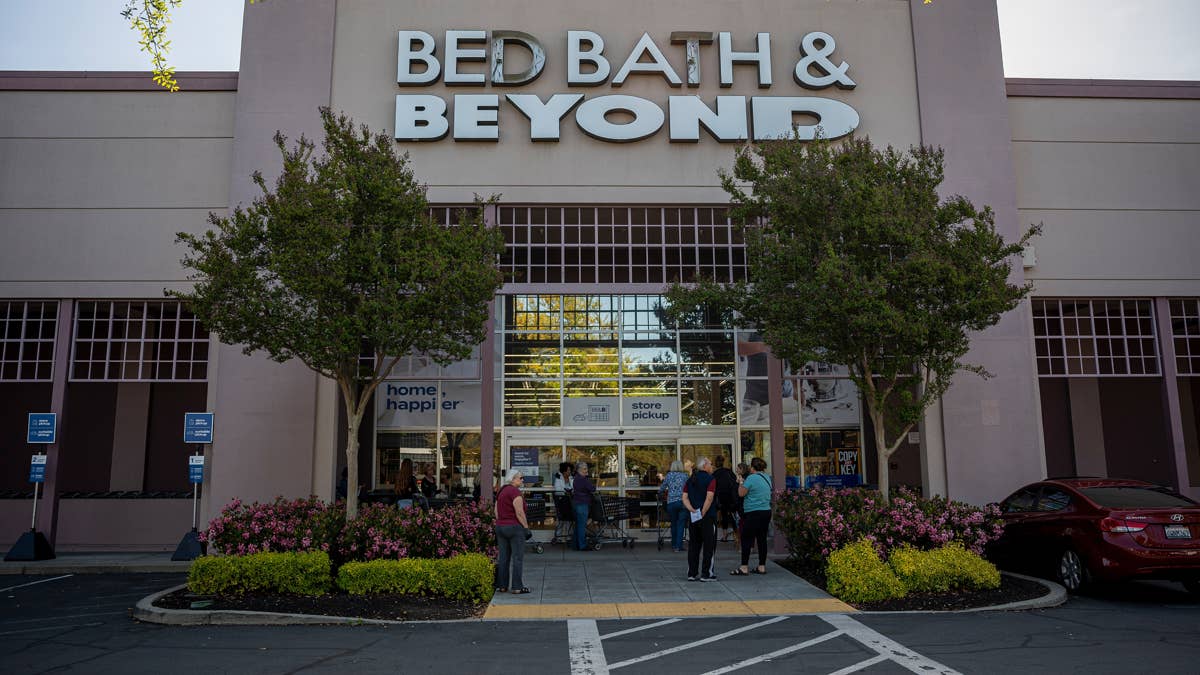
After closing all its stores, filing for bankruptcy, and undergoing several ownership changes, Bed Bath & Beyond is attempting to rebuild its retail footprint.
The home goods retailer is making a comeback after years of store closures, but its latest strategy raises questions about whether it can avoid repeating the mistakes that contributed to its previous financial struggles.
Founded in 1971, Bed Bath & Beyond is now owned by Neighborhood Intelligence, Inc.
Bed Bath & Beyond opens its first standalone store since bankruptcy
Bed Bath & Beyond has opened its first standalone store under its current ownership, three years after the original retailer filed for Chapter 11 bankruptcy in 2023.
The new store is located at 7580 W. Bell Road in Glendale, Arizona, and spans 19,000 square feet. It offers a familiar Bed Bath & Beyond shopping experience, updated to reflect today’s homes and lifestyles.
The location features the retailer’s iconic towel wall, bedding displays, kitchen gadgets, storage and organization, and home décor. Products from The Container Store, including its organization solutions, are also available.
Perhaps most notably, the retailer is bringing back its iconic 20% off coupon, a promotional strategy that became closely associated with its previous business model.
Although the coupon helped attract shoppers, Bed Bath & Beyond’s heavy reliance on discounts raised questions about its ability to maintain healthy profit margins and compete without promotions.
“Bed Bath & Beyond is a brand that generations of customers have welcomed into their homes, and we’re excited to bring it back to their neighborhoods,” said Neighborhood Intelligence President Amy Sullivan in a statement.
“We’re bringing back the things customers have always loved, from the iconic shopping experience to the brands, products, and value they remember, while introducing new ways to help customers make the most of every room in their home. Glendale is an important milestone, and we’re just getting started.”
Bloomberg / Getty Images
Bed Bath & Beyond plans to open more stores after closing several locations
The Glendale opening is part of the company’s broader efforts to expand Bed Bath & Beyond through standalone stores and co-branded locations with The Container Store.
These planned openings fall under Neighborhood Intelligence’s (NXH) broader Everything Home strategy, which aims to connect customers with retail brands, home products, and services through an expanding network of neighborhood stores and digital experiences.
The company plans to open additional standalone Bed Bath & Beyond stores in Minnesota, Florida, and Mississippi in 2027.
“We want customers to rediscover Bed Bath & Beyond, find the things they love, and have a reason to come back again and again. That’s how we build lasting relationships with our customers and stronger businesses in every neighborhood,” said Sullivan.
However, the expansion comes as Neighborhood Intelligence continues to reduce its footprint across its business while eliminating locations that no longer meet its financial expectations.
Neighborhood Intelligence closes stores amid expansion and ownership changes
Bed Bath & Beyond has undergone several restructuring efforts and ownership changes over the last few years.
The original retailer filed for Chapter 11 bankruptcy in April 2023 after accumulating $1.8 billion in long-term debt. The filing led to the closure of all its existing stores, including 360 Bed Bath & Beyond locations and 120 buybuy BABY stores.
Here’s some of my previous coverage on Bed Bath & Beyond business:
- After bankruptcy shutdown, iconic home brand opens new stores
- Iconic retail name makes unexpected brick-and-mortar comeback
- Struggling home goods chain closing more stores
The company’s financial struggles reflected broader challenges with its retail strategy, including its reliance on promotions and discounts to attract customers. While its 20% off coupon helped drive traffic, the retailer’s reliance on frequent promotions contributed to concerns about its ability to maintain margins and sell products at full price.
Two months after the bankruptcy filing, Overstock.com acquired Bed Bath & Beyond’s intellectual property and related assets for $21.5 million, allowing the online retailer to revive the brand.
The acquiring company subsequently operated under the names Beyond, Inc. and Bed Bath & Beyond, Inc. before adopting its current name, Neighborhood Intelligence, Inc., in August 2026.
Today, Neighborhood Intelligence owns several retail brands, including Bed Bath & Beyond, Overstock, buybuy BABY, Kirkland’s, and The Container Store, as well as home organization businesses Elfa and Closet Works. The company is also expanding its Home Services and Home Ownership businesses.
Despite its plans to reopen Bed Bath & Beyond stores, the company continues to close locations across its portfolio as it works to improve financial performance and reshape its retail operations.
During Neighborhood Intelligence’s third-quarter fiscal 2026 earnings call, CEO Marcus Lemonis said the company plans to close 11 The Container Store locations by the end of the year. It is also in the process of exiting 39 Kirkland’s stores that no longer meet profitability standards and have leases approaching expiration.
Together, the upcoming exits show how the company is prioritizing locations it considers financially sustainable as it expands its retail strategy.
Neighborhood Intelligence’s latest financial results also reflect changes across its business. During the third quarter of fiscal 2026, the company reported a 98% year-over-year revenue increase, primarily driven by its acquisitions of Kirkland’s and The Container Store. Its gross margin reached 34%.
These closures underscore the balancing act facing Neighborhood Intelligence as it attempts to revive a familiar retail brand while restructuring other businesses to build a more sustainable portfolio.
Related: Popular formerly bankrupt retail chain makes brick-and-mortar comeback
