
I have a friend who escaped poverty through his own efforts. Yet after more than a decade of solid earnings, he has saved nothing. Despite running his own business, he remains constantly in debt.
Rather than living modestly, he has developed an insatiable appetite for wealth. He also recently claimed that $2,500 a month, with no rent and living alone in a U.S. suburb, wasn’t enough to live comfortably.
It made me think about how differently people approach money, and how easily some lose sight of the value of saving and making every dollar count. For millions of American families, however, stretching every dollar isn’t a choice.
According to a March 2026 Urban Institute report, 56% of people in families with all adults under 65 and children present fell below the economic security threshold in 2023. The national median annual economic security threshold for families with adults under age 65 and children was $144,700.
That is where safeguards like Target’s holiday price-protection benefit come in, offering budget-conscious shoppers a buffer against seasonal price swings so they aren’t penalized for buying when they need to.
Target launches a holiday price-match guarantee
Target first launched permanent online price-matching in 2013 to stop “showrooming” shoppers browsing store aisles and buying cheaper on Amazon. For 12 years, the chain matched main rival retailers.
That policy ended in July 2025, when Target officially dropped competitor price-matching to exit the costly discount war against rivals like Walmart and Amazon, reported CBS News.
Read more: Target puts protein snacks on its holiday menu
Today, the policy is strictly an internal buffer. Target activates its Holiday Price Match Guarantee every year as an annual seasonal fixture, while during the rest of the year, Target maintains a standard 14-day price-adjustment window.
Every autumn, the retailer temporarily extends this policy into a holiday safeguard:
- The timing: The seasonal guarantee reliably kicks off around Nov. 1 and runs straight through Dec. 24.
- How It works: Any qualifying item purchased during that timeframe is protected through Christmas Eve. If Target drops its own price on Target.com or in stores at any point during those seven to eight weeks, customers can present proof of purchase and receive a refund for the difference.
- The retail purpose: Retailers want consumers to spread their spending throughout November and December rather than waiting for Black Friday or last-minute flash sales. The annual policy eliminates the timing gamble, giving shoppers the confidence to purchase early without worrying that a subsequent seasonal markdown will penalize them.
- Source: Target’s official Price Match Guarantee
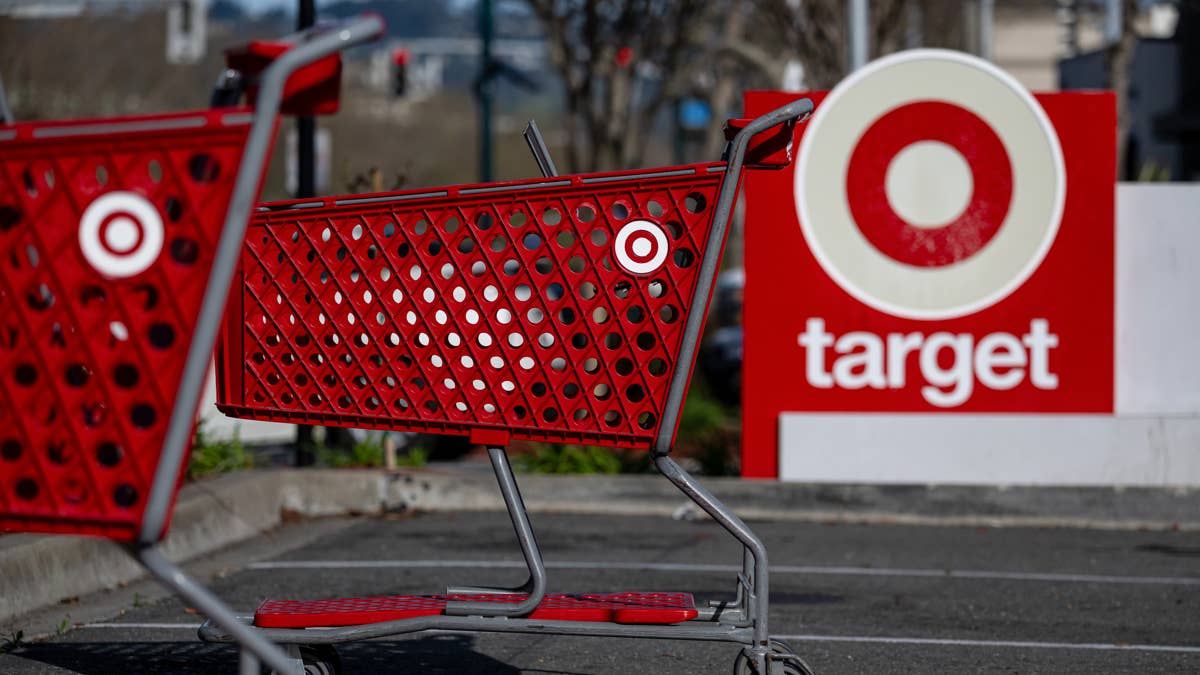
Bloomberg / Getty Images
Target price match restrictions consumers should be aware of
Per Target’s official page on the offering, there are some interesting restrictions a number of consumers might not be aware of. For example:
- The item must be identical.
- A price from another Target store does not qualify for an in-store purchase.
- Screenshots are not accepted as proof of a lower price.
- The customer needs the original receipt or order information.
While Target dropped competitor price matching in 2025, Best Buy continues to offer the perk, allowing customers to match prices at retailers including Amazon, Walmart, Costco and Apple within 15 days of purchase (60 days for eligible Plus and Total members). This gives Best Buy a competitive edge, particularly for big-ticket electronics.
As Jeffrey H. Snyder, CEO of Broadcast Retirement Network, recently told TheStreet: “When shopping for larger ticket items such as TVs and computers, I appreciate a retailer being able to match another retailer’s prices and Best Buy is kind of the only game in town.”
Price match guarantees have a powerful psychological impact on consumers
Although Target no longer matches competitors’ prices, its remaining 14-day or seasonal price adjustment policy still offers an important consumer benefit, allowing shoppers to claim the difference if an eligible item becomes cheaper at Target shortly after purchase.
Consumer Reports’ Samantha Gordon highlights the value of these policies, explaining: “With price adjustments, it’s after you’ve already bought something and you’ve seen a price drop. You can go and get an adjustment and get a partial refund.”
The benefit also ties into broader consumer expectations around pricing fairness. A Gartner survey found that 80% of consumers consider brands with consistent pricing more trustworthy, suggesting that even without competitor matching, price protection can help retailers build customer confidence.
More Target:
- Target tackles a frustrating problem for shoppers
- Target jumps on food trend Kroger and Publix embraced
- Target rolls out another generous deal to win back customers
Price-matching guarantees can have a powerful psychological impact on consumers, shaping their perception of a retailer as offering competitive prices even before they compare prices elsewhere.
Research published in the Journal of Consumer Psychology found that consumers interpret price-matching guarantees as signals of lower store prices. The promise of a refund also increases shoppers’ confidence in their purchase and can reduce the perceived need to continue searching for better deals.
A separate study published in Research Gate found that refund guarantees can reduce further price searching when consumers face high search costs.
For shoppers trying to make every dollar count, knowing they can claim the difference if prices drop can make holiday spending a little less stressful.
Related: Thousands of Publix shoppers angry over its prices
