
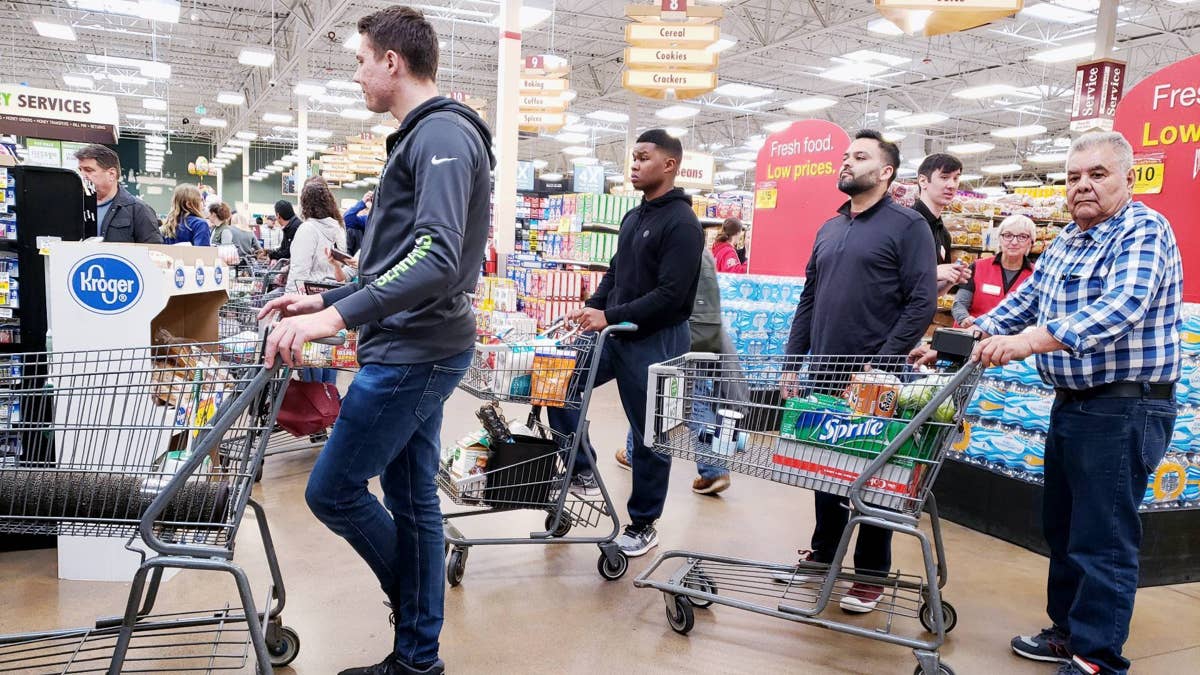
Kroger is piloting a major change to its store hours as it continues to see customers curb their spending amid economic uncertainty.
The company, whose grocery banners include Fred Meyer, Smith’s and Ralphs, saw its identical sales (excluding fuel) increase only 0.2% year over year in the second quarter of 2026, according to its most recent earnings report.
Kroger CEO Greg Foran said on an earnings call on Sept. 11 that sales growth has been slowing down since the start of the year as customers remain “under pressure.”
“Reductions in SNAP benefits, higher fuel prices, and softer consumer confidence are all putting pressure on household budgets,” said Foran. “Customers are buying more on need.”
Kroger tests return of 24-hour store service
As Kroger navigates this challenge, it is testing the return to 24-hour store operations, a format it abandoned during the COVID-19 pandemic.
According to a recent report from the Cincinnati Enquirer, Kroger is testing 24-hour service in one store in Cincinnati, OH, and five other locations in Indiana.
“We are always looking for more ways to provide our customers with fast and convenient ways to shop – both in stores and online,” said Kroger in a statement to the Cincinnati Enquirer. “The small pilot program revisiting stores open 24 hours a day is one more example of the ways we are working to better serve our customers”
Most of Kroger’s stores open at 6 a.m. and close at either 10 p.m. or 11 p.m. (depending on the location).
Related: Kroger loses $12 billion as customer behavior takes a turn
Several of its locations used to run 24 hours; however, Kroger pulled the plug on this model in March 2020 to give its workers more time and space to clean and restock stores amid the coronavirus outbreak.
Other large retailers, such as Walmart, CVS, and 7-Eleven, have also either scaled back or eliminated 24-hour operations during the pandemic.
Many retailers have opted not to return to this store model due to the rising costs of labor, food supplies and rent, according to a report from Marketplace in 2024.
However, some grocery chains have recently been extending their store hours to win over customers.
For instance, last year, Costco elongated store hours by allowing executive members to start shopping at 9 a.m. daily, an hour earlier than before. It also began closing its stores at 7 p.m. on Saturdays, an hour later than its previous closing time.
BJ’s Wholesale followed in Costco’s footsteps in April when it added one extra hour to its club and gas station operations. Walmart is also reportedly running a pilot program where select stores remain open until 1 a.m.
Shutterstock
Kroger faces mounting pressure from rivals
The latest move from Kroger comes as it faces increased competition in the grocery industry.
A recent Numerator report revealed that more than $12 billion in CPG (consumer packaged goods) spending shifted from Kroger to Walmart, Costco and Amazon over the past year.
In a June LinkedIn post, Neil Saunders, a retail analyst and managing director at GlobalData Retail, said that Kroger fails to stand out from its competitors in several key areas that attract customers.
“Kroger has enormous reach and powerful economies of scale,” said Saunders. “The problem is that, for many years, it has failed to capitalize on these things. The company hasn’t been aggressive enough, nor has it been sufficiently progressive.”
More Grocery News:
- BJ’s Wholesale customers will face a significant store change
- Kroger loses $12 billion as customer behavior takes a turn
- Publix struggles to reverse concerning customer behavior
“The result is that it’s become a bland, middle-market grocer that isn’t sufficiently differentiated,” he continued. “It doesn’t win on price. It doesn’t win on experience. It doesn’t win on private label. It doesn’t win on ecommerce in the way Walmart does. And that means it struggles to hold on to sales as customers increasingly shop around for alternatives.”
On the company’s earnings call on Sept. 11, Foran emphasized that the company is focusing on enhancing the customer experience to boost sales, noting that “customers have choices, and the bar for convenience and reliability keeps moving higher.”
“Customers want value, quality, convenience, and a shopping experience they can trust,” he said. “When we deliver those things consistently, we earn bigger baskets and more trips.”
“A lot of the work we need to do is right in front of us,” he continued. “We are making progress on execution across the business, but there is still work to be done, and opportunity remains inside our stores.”
Related: Publix struggles to reverse concerning customer behavior
