
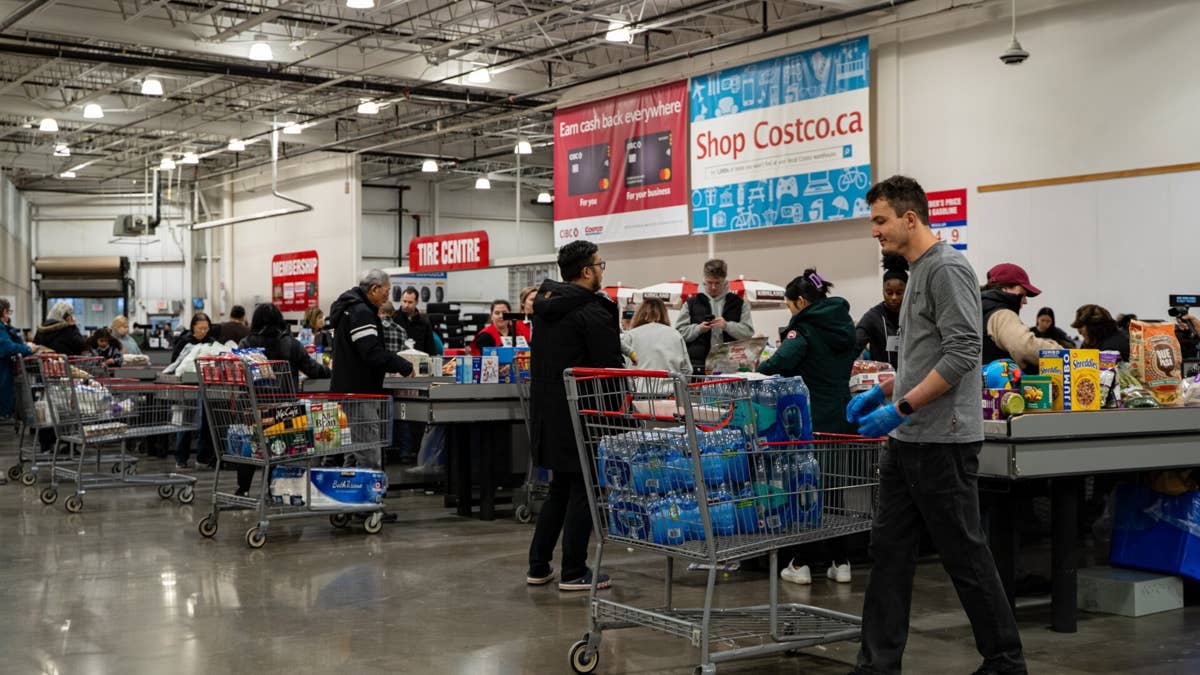
It costs more to shop at Kroger compared to Aldi and Costco, but CEO Gregory Foran thinks that’s something consumers won’t worry about.
Aldi and Costco both offer a limited selection, but having fewer items on their shelves allows them to negotiate better deals with vendors and offer customers lower prices. The difference is substantial, according to a Consumer Reports study of grocery prices.
The report, which used Walmart’s prices as the baseline, showed that Kroger charges 14.8% more than Walmart, Aldi came in at 8.3% less, and Costco was the pricing leader at 21.8% cheaper.
Foran has acknowledged that his company can do better on pricing, but also admits that it won’t be able to equal its rivals.
“Over time, our promotions have gotten too complicated, and our price position has not kept pace where it needed to,” he said during Kroger’s first-quarter earnings call.
His feelings on price, however, focused on lowering the gap between Kroger’s various nameplates and their rivals.
“Let me be clear on what this means. We do not need to be the lowest-priced retailer. We need to be more competitive, more consistent and easier for customers to understand,” he added.
Foran, however, thinks his supermarkets have an advantage over Aldi and Costco that will bring customers in, even with its prices being higher.
Kroger bets on selection
Foran made it clear that he thinks that consumers want the convenience of a full-service supermarket that stocks everything a shopper might want. He never said the name Costco, but his remarks are clearly calling out the warehouse club, along with its rivals, including Sam’s Club and BJ‘s Wholesale.
“So we’ve got the scale, and we’ve got the assets to be able to compete. And we’ve got the format. There is no doubt that clubs are a powerful format and perform extremely well. But not everyone wants to go into a store that size and have to deal with pack sizes that big,” he said.
Foran believes that offering a traditional full selection of groceries is an asset.
“A lot of people prefer to get into a 50,000, 60,000 square foot store and do their shopping and get out again. And by the way, if you’re picking groceries and you’re picking them in a store that size, they can also be quite efficient. So I like the fact we’re in supermarkets,” he added.
More Kroger:
- Kroger hit by 19 million egg recall over serious health risk
- Kroger supermarkets add exclusive LTO Sprite soda
- We compared Walmart’s new prices to Target and Kroger
Consumers, however, have not actually been following the model of getting all their shopping done at a single store.
“In an effort to fulfill their unique definitions of value, consumers visit more than five separate grocery store banners on average per month despite growing omnichannel grocery shopping trends,” FMI CEO Leslie Sarasin said in The Food Industry Association’s (FMI) U.S. Grocery Shopper Trends 2026 report released in May.
Shutterstock
Kroger CEO calls out Aldi
Foran also specifically called out Aldi during his remarks.
“Good article about Aldi in the Financial Times today, but not everyone wants to go into a store with 2,500 to 3,000 own-brand SKUs. They want to be able to buy national brands,” he said.
Kroger’s CEO believes that selection can trump low prices, as long as his chain feels like its offering consumers a fair deal.
“When a customer is deciding where to shop, we want more of them choosing Kroger more often because the value is clear, the experience is great, and the trust is there,” he said.
Foran believes the company has to find ways to cut costs in order to lower prices.
“Every dollar we invest in customer value we earn through cost savings and efficiency. That’s the standard we’re holding ourselves to,” he added.
Americans want lower grocery prices
Americans spend on average $169 per week on groceries as of February 2026, according to FMI’s U.S. Grocery Shopper Trends 2026 report.
A considerable number of Americans, 40%, are “value seekers” on food overall, according to a Deloitte study.
“Four in 10 Americans surveyed were identified as value seekers. Of these consumers, almost two-thirds are cooking more meals at home (65%), and over half are purchasing cheaper ingredients from the grocery store (53%) and switching to store brands/private labels (59%), which is about 10 times the rate of non-value-seekers,” the data showed.
RTM Nexus CEO Dominick Misernadino believes that Foran is correct in his assessment of how Kroger can compete.
“Calling Kroger a loser because their prices are higher than Aldi or Costco misses how grocery actually works. They aren’t even playing the same game,” he told TheStreet.
He made it clear that Kroger needs to focus on being the best possible version of a supermarket in order to succeed.
“If you try to out-discount Aldi or out-bulk Costco, you lose every single time. Kroger’s whole advantage is selection and convenience,” he added.
Miserandino thinks that even cash-strapped consumers still like the convenience of a traditional grocery store.
“Aldi gives you two thousand items — mostly their own brand — and Costco sells paper towels in six-month supply packs. Kroger stocks thirty thousand products. If you need a specific brand, a precise cut of meat, or just a single lemon instead of a five-pound bag, you aren’t getting that at Aldi or Costco. People will gladly pay a slight premium to avoid making three separate stops on a Tuesday night,” he shared.
Related: Costco’s new service beats Amazon at its own game
