
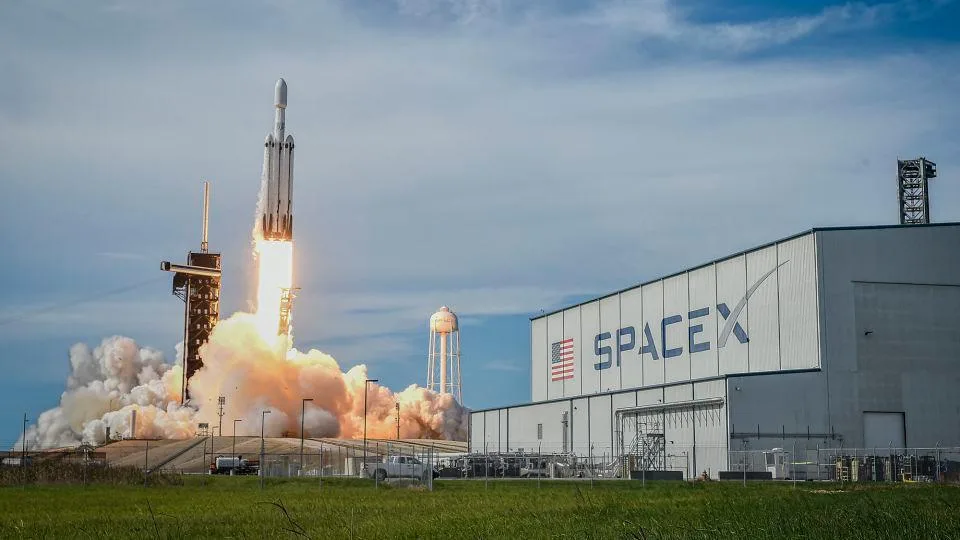
Every blockbuster initial public offering enjoys a honeymoon period, but for Space Exploration Technologies Corp. (NASDAQ: SPCX), market reality has officially caught up with post-IPO euphoria. Just weeks after completing Wall Street’s largest public debut at an offering price of $135 per share—and briefly rocketing to a record high of $225.64—SpaceX’s stock has broken through key technical support to touch a fresh post-IPO low beneath $115. The aggressive sell-off has wiped out more than $1.1 trillion in market capitalization, bringing the aerospace leader’s valuation down to roughly $1.52 trillion.
While long-term bulls argue that the drawdown represents a rare buying opportunity for a foundational tech monopoly, a confluence of technical overhangs, operational delays, and valuation compression continues to fuel intense market pressure.
The $116 Billion Supply Wall: Inside the Lock-Up Expiration
The primary catalyst driving institutional allocators to trim exposure ahead of August is an impending supply shock. When SpaceX listed in June, underwriters intentionally floated only a tiny fraction of total equity to public markets—roughly 5% of its overall share count. The remaining 95% remained locked away under standard post-IPO insider agreements. That restriction officially dissolves on August 6, freeing an estimated 900 million insider-held shares for open-market liquidation.
Traders are aggressively de-risking ahead of the event out of fear that even a small percentage of those unlocking shares hitting order books could swamp daily market liquidity. Compounding the anxiety is a congested calendar: SpaceX reports its maiden public quarterly earnings on August 4, forcing Wall Street to digest fundamental earnings metrics and a massive float expansion within a 48-hour window.
Starship Execution Scraps and Fundamental Valuation Realities
Operational friction has provided bears with additional leverage. A recent Starship V3 launch attempt at Starbase, Texas was scrubbed after four Raptor booster engines failed to ignite during the final pre-liftoff sequence. While engine aborts are standard during experimental aerospace development, public equity markets penalize execution delays far more harshly than private venture capital networks. Delays to Starship directly push back commercial deployment schedules for next-generation Starlink constellations and elevate projected capital expenditure requirements.
From a balance sheet perspective, skeptics point out that trading at premium multiples while absorbing heavy net operational losses leaves zero margin for error. Furthermore, cross-asset sentiment surrounding Tesla’s quarterly earnings routinely impacts $SPCX price action, as macro funds evaluate capital allocation across Elon Musk’s broader corporate ecosystem.
Despite near-term turbulence, the fundamental thesis behind SpaceX remains anchored by its dominant launch monopoly and expanding satellite broadband footprint. However, until the August 6 lock-up clears and the company provides clear execution timelines for Starship during its August 4 earnings call, $SPCX is likely to remain locked in a volatile price discovery phase. For retail and institutional investors alike, navigating the current drop below $115 requires balancing short-term supply indigestion against long-term conviction in the future of commercial space infrastructure.
