
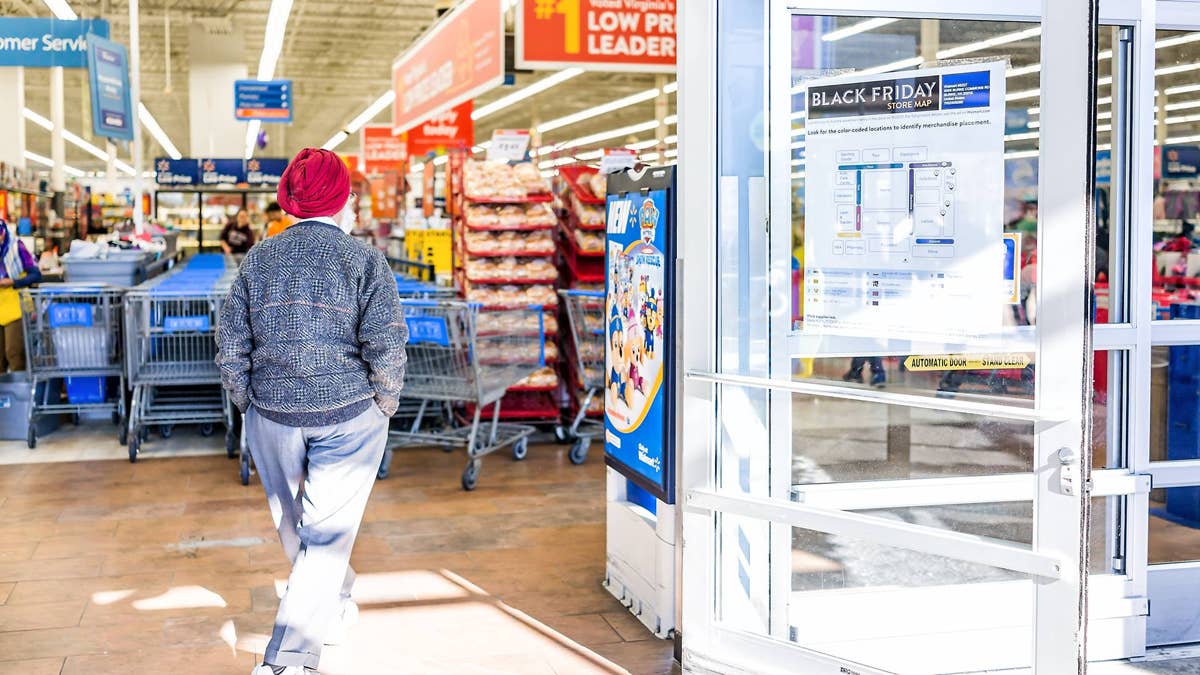
Walmart has lowered prices on a range of grocery staples, including ground beef, corn on the cob, cherries, and 24-packs of soda.
The nation’s largest retailer recently unveiled a summer rollback campaign covering thousands of products across groceries, household essentials, and seasonal goods nationwide.
Walmart had about 7,200 rollbacks in place during its fiscal first quarter ending April 30, up more than 20% year over year, and roughly half of them targeted food items, Walmart Chief Financial Officer John David Rainey told Yahoo Finance.
Such market dominance matters for the 280 million customers who shop with the retailer each week, particularly as grocery prices keep rising.
The U.S. Department of Agriculture projects overall food prices to rise 3.2% this year, meaning broad relief is not on the way.
Walmart targets the products shoppers price-check in their heads
The rollbacks that took effect in early July focus on items consumers tend to watch closely, including beef, fresh produce, and beverages.
A one-pound roll of 73% ground beef dropped from $6.74 to $5.94, a reduction of nearly 12%, according to Walmart’s July 6 press release.
A 2.25-pound bag of fresh red cherries fell from $11.18 to $5.63, effectively cutting the price in half, the company confirmed.
Fresh sweet corn dropped 63% to $0.25 per ear, and Coca-Cola 24-packs fell 33% from $14.97 to $9.97, Walmart reported.
“This summer, we’re making even more investments in price, with thousands of rollbacks across the products customers are shopping for most, including beef, fresh produce and beverages, grills, pools, toys, and summer fashion apparel,” Julie Barber, Walmart U.S.’s executive vice president and chief merchant, said in the July 6 press release.
Sam’s Club also lowered prices on more than 250 items, including bone-in chicken wings and ground beef, the company confirmed.
Analysts say Walmart’s discounts could ignite a grocery price war
The scale of the rollbacks has drawn attention from Wall Street, where several analysts now expect the broader grocery sector to respond.
Walmart’s price rollbacks had already climbed roughly 20% during the first quarter and are expected to accelerate further, Wolfe Research analyst Spencer Hanus noted, as reported by Invezz.
More Walmart:
- Walmart makes a major move to lure customers from Amazon Prime Day
- Walmart launches exclusive premium beef line
- Walmart makes a move to challenge Lowe’s and Home Depot
“Grocery will get even more competitive in the second half. With Kroger, Albertsons, Costco, and Dollar Tree all being very vocal about price investments, this announcement will heighten concerns about a price war,” Hanus wrote.
The barrier for competitors remains steep, because closing a 1% price gap with Walmart costs roughly $1.5 billion, Hanus estimated in the report.
Kroger’s new chief executive, Greg Foran, has already signaled plans for the supermarket chain’s largest round of price cuts in years, Bloomberg reported on May 21.
krblokhin/Getty Images
Walmart’s first-quarter results show the pricing strategy is paying off
Total revenues for the quarter ended April 30 rose 7.3% to $177.8 billion, and net income climbed 18.8% to $5.3 billion, according to Walmart’s first-quarter FY2027 earnings release.
Comparable sales in the U.S. segment grew 4.1% year over year excluding fuel, and global e-commerce sales surged 26%, the company reported.
Goldman Sachs analyst Kate McShane noted that Walmart’s pricing favorability reached 65.7% in June, up from 64.9% previously, Yahoo Finance reported.
“We look at pricing perception, which we believe is a forward indicator for traffic, as well as value perception,” McShane wrote.
Walmart CFO John David Rainey told analysts on the Q1 earnings call that the company could be eligible for roughly $2.4 billion in tariff refunds, less than half of 1% of its U.S. annual sales, and would “definitely bias and try to prioritize” using that money to fund price cuts.
What Walmart’s rollbacks mean for grocery spending this summer
The headline discounts on ground beef and fresh produce are real, but they do not change the broader trajectory of food prices.
The USDA’s most recent Food Price Outlook projects overall food costs to rise 3.2% in 2026, with grocery prices expected to increase 2.8%, the agency’s summary findings showed.
Faith Parum, an economist with the American Farm Bureau Federation, said during the release of the organization’s 2026 Summer Cookout Cost Survey that while families are spending more at the register, the increases are tracking in line with broader inflation rather than outpacing it.
This year, the basket is a bit more expensive, but it’s actually holding pace with inflation, so our cost is up about four percent from last year, but the overall annual inflation rate in the United States is 4.2 percent, and so we’re right at the inflation levels
Beef and veal prices are forecast to climb 7.5% this year, driven by cattle supplies hovering near their smallest level in 75 years, the USDA reported.
Walmart’s pricing edge is widening, but the second half will test it
The pricing advantage Walmart holds over most grocery store competitors appears to be widening, and the coming months will determine whether rivals can narrow the gap.
Walmart’s value favorability improved to 44.9% in June from 44.6% a year earlier, reinforcing a three-year trend of outpacing most big-box peers, Yahoo Finance reported.
As food costs and gas prices remain high, the retailer’s rollback campaign offers shoppers lower prices on some everyday items. But it does little to ease the overall cost of a grocery bill.
Related: Walmart quietly found a way to undercut Costco on gas
