
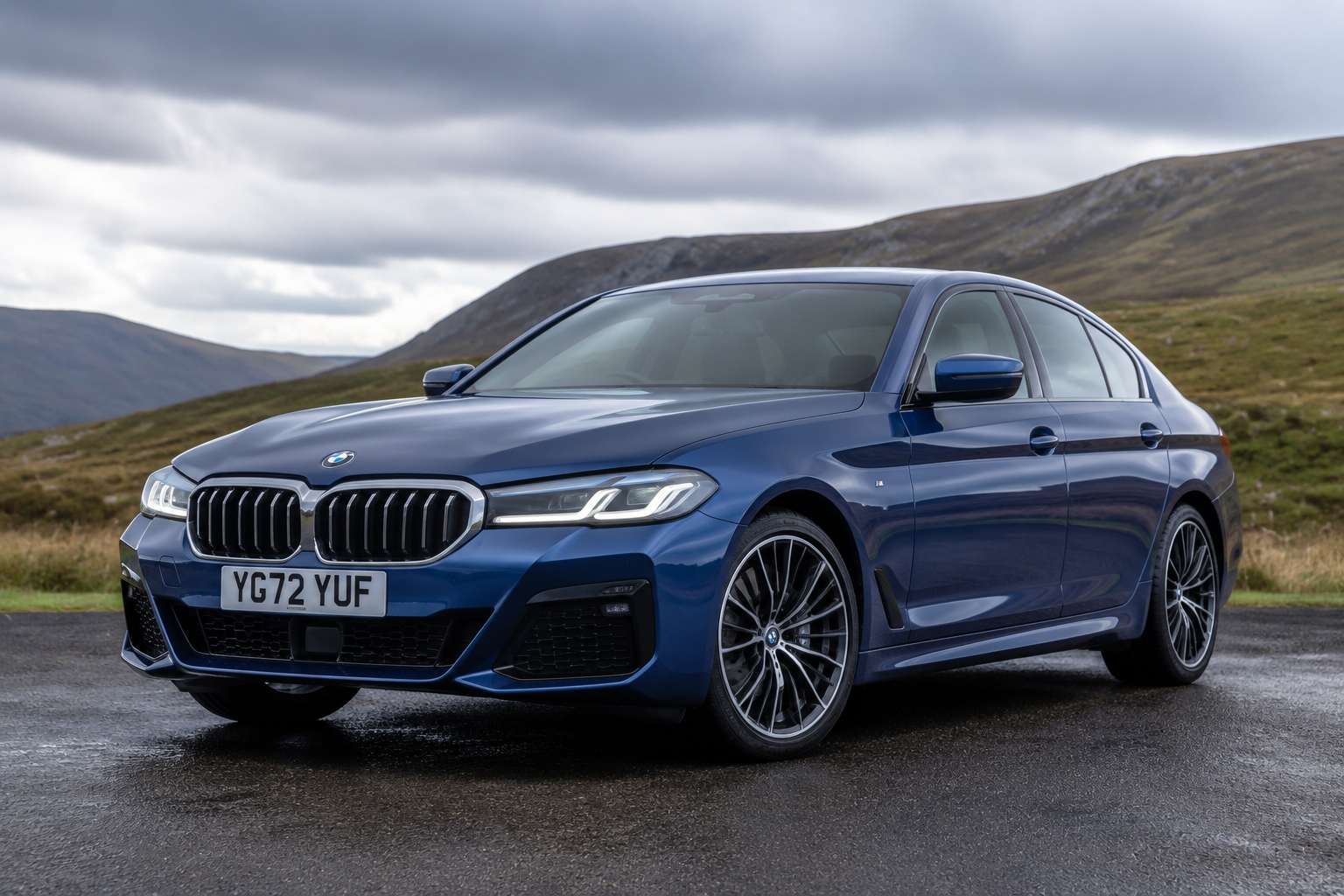
Shares of BMW fell 7% on Tuesday after the German luxury carmaker issued a sweeping profit warning, citing worsening market conditions in China and the impact of geopolitical tensions in the Middle East.
The decline pushed BMW shares to their lowest level since November 2020 and dragged other European automakers lower, with Volkswagen and Mercedes-Benz also coming under pressure as investors reassessed the outlook for the sector.
The warning comes just weeks after Milan Nedeljkovic succeeded Oliver Zipse as chief executive, adding to scrutiny over the company’s strategy at a time when European automakers are grappling with structural changes in their largest overseas market.
China’s weakness hits earnings outlook
In a statement released after market close on Tuesday, BMW said conditions in China deteriorated further during the second quarter, leading to more intense competition that has spilled over into the wider Asia-Pacific region.
The company said weaker sales in the region have outweighed stronger performance in Europe and the United States.
BMW also pointed to the economic fallout from the conflict in the Middle East, saying elevated energy prices have increased costs while geopolitical uncertainty has weakened consumer sentiment across global markets.
As a result, the company cut guidance across several key financial metrics.
BMW lowered its automotive earnings-before-interest-and-tax margin forecast to 1%-3%, down from a previous range of 4%-6%.
The return on capital employed in its automotive division was reduced to 1%-5% from 6%-10%, while group profit before tax is now expected to decline significantly, compared with an earlier forecast for a moderate decrease.
Analysts say cut exceeds expectations
The magnitude of the guidance reduction surprised analysts who had already anticipated some deterioration in earnings due to persistent weakness in China.
Deutsche Bank analyst Tim Rokossa said BMW was expected to revise its outlook, but the scale of the downgrade was larger than anticipated.
Rokossa noted that BMW shares had already been underperforming and highlighted the company’s recent decision to cancel a long-planned CEO-investor meeting.
He said the updated outlook reflected softer conditions in China and across Asia-Pacific, as well as second-order effects from the Middle East conflict.
“There are now more questions than answers,” Rokossa wrote, adding that investor events scheduled later this year may provide only limited clarity.
Deutsche Bank lowered its price target on BMW shares to 90 euros from 100 euros while maintaining a buy rating.
Questions over business model
Alongside the weaker outlook, BMW said it would intensify cost-cutting efforts and warned of a negative one-off impact during the second half of 2026.
That announcement has fuelled speculation that management may be preparing broader structural changes.
Jefferies analysts said investors had largely expected a profit warning but not a margin reset of this scale.
The brokerage suggested the comments indicate management may be preparing significant changes to BMW’s manufacturing footprint.
“It seems to us that BMW could be rethinking a global assembly business model,” Jefferies wrote.
The bank expects BMW to increase sourcing and production integration in North America and China, reducing reliance on exporting internal-combustion-engine components from Germany.
Jefferies also said future discussions could focus on capital allocation, non-automotive investments and the possibility of using China as a larger export base because of its cost advantages.
The brokerage cut its price target to 70 euros from 92 euros while maintaining a hold rating.
Industry faces broader shift
BMW’s challenges mirror wider changes confronting the European auto industry.
Volkswagen Chief Executive Oliver Blume has previously warned that the export-led model that underpinned Germany’s automotive success for decades is becoming less viable.
For years, European manufacturers relied on strong profits from China, the world’s largest car market.
However, domestic Chinese brands have steadily gained market share, while an extended slowdown in vehicle demand has intensified competition.
China’s auto market recorded its eighth consecutive month of declining sales in May, increasing pressure on foreign manufacturers already struggling to maintain pricing power.
For investors, BMW’s warning has become the latest indication that Europe’s carmakers may need to accelerate strategic changes as they adapt to a rapidly evolving global automotive landscape.
The post BMW shares tumble 7% as China weakness forces sharp forecast cut appeared first on Invezz
