
There’s a Costco in suburbia where someone just bought a sauna.
Not a candle that smells like a sauna. An actual cedar box you sit inside and sweat. It rode out on a flatbed cart, behind the same person pushing a regular cart with a rotisserie chicken and a 30-count of paper towels, someone who joined this place to save money.
That cart is the whole story of Costco right now.
For years the pitch was simple: pay your membership, buy in bulk, save on gas. It was essentially penny-pinching as a lifestyle.
But somewhere in the last few quarters the penny-pinchers started treating themselves, and not modestly. Saunas and massage chair sales were up almost 50% last quarter. People are walking into a warehouse to buy toilet paper and walking out with a recliner that kneads their back.
The trick is that it doesn’t feel like splurging. It feels like winning.
Costco members practice self care
Costco has become a way for members to reward themselves and practice self care while also being financially careful.
CFO Gary Millerchip made it clear that members increased their spending in self care during the chain’s third-quarter earnings call.
“Self care and wellness items performed extremely well during the quarter, including fragrances and hair and skin products in the health and beauty and small appliances departments,” he said.
Millerchip noted that these purchases were not limited to lower-ticket items.
“We also saw members wanting to splurge on higher value self care items where the quality and value is compelling. For example, we experienced almost 50% sales growth in saunas and massage chairs during the quarter,” he added.
The self-care surge landed during a strong stretch for the company. Costco posted record fiscal third-quarter revenue of $69.15 billion, with same-store sales up 9.8% year over year its highest in more than two years, and paid household membership rose to 82.9 million, according to its third quarter earnings press release.
Costco also saw large sales gains in a number of other areas, many of them in discretionary spending areas.
“Pharmacy, gold and jewelry, home furnishings, tires, special events, housewares, and majors all grew double digits year over year,” according to Millerchip.
Related: History of Costco: Company timeline and facts
Costco serves a growing beauty trend
Beauty spending in spring 2026 is being reshaped less by outright cutbacks and more by precision, according to the Alvarez & Marsal Consumer Sentiment Spring 2026 Report.
Consumers are still willing to spend, but they expect something in return.
“Across the category, 43% of consumers have simplified their beauty routines, but simplification is not translating into blanket downtrading. Instead, spending is concentrating,” the study showed.
Costco’s growing assortment of beauty and wellness products gives members a way to indulge without paying full retail prices, matching the value-focused behavior highlighted in the report.
“The Alvarez & Marsal Consumer Sentiment Spring 2026 Report shows net beauty spending intent at -3%, meaning slightly more consumers plan to reduce rather than increase spend. Personal care is marginally more resilient at -1%, but both sit well below neutral, signaling stabilization rather than growth,” according to the report.
Data from Circana backed up the concept that consumers are spending on beauty, but being careful with their dollars.
“Mass market beauty continues to gain momentum in the U.S. as consumers seek high-performing products at accessible price points,” Circana reported.
The research showed that shoppers are looking for value.
“In skincare, masstige brands — or those offering premium benefits at mass prices — are delivering double-digit growth, enabling mass skincare to outperform prestige in terms of both dollar and unit sales. These results reflect a broader consumer shift toward efficacy without premium pricing, with mass retailers increasingly offering elevated options that meet these expectations,” according to the research firm.
Shutterstock
Costco shares its buying strategy
Millerchip offered some insights as to how Costco’s process for deciding what items to add to its warehouses.
“I think that quality value, and newness are extremely important, and the things that our buyers are focused on every day,” he said.
Self care and personal indulgences are a big part of those plans.
“And on the excitement side, finding new gold items for members to take advantage of, special events, I mentioned some of the self care items that we are selling in health and beauty and small appliances. They are really the areas where I see, you know, members taking advantage of some opportunities to treat themselves at great values,” he added.
Costco Chairman Hamilton “Tony” James explained in a recent interview with Chief Executive that Costco has always done well selling big-ticket items.
“Since the beginning, we’ve always known we could move anything in volume if the quality was good and the price was great — Rolex watches, Dom Perignon, 10-karat diamonds. A Porsche dealer in Seattle put their cars on the floor of a Costco, and they sold out in a week. Affluent people love a good deal,” he said.
The longtime board member noted that Costco’s strategy isn’t just about selling the cheapest items.
“If someone wants to buy a $500 TV for $250 at Costco, we want to sell them a $1,000 TV for $500 instead. We’re always trying to find better items to sell to members, giving them a great deal. We’re by no means a dollar store,” he added.
Costco’s ability to sell premium products has also attracted brands looking to reach affluent consumers.
“I think that Costco’s reputation for serving that somewhat higher-income demographic makes the chain more attractive to brands that target those shoppers, as well, creating something of a self-fulfilling cycle,” Morningstar analyst Zain Akbari told CNBC.
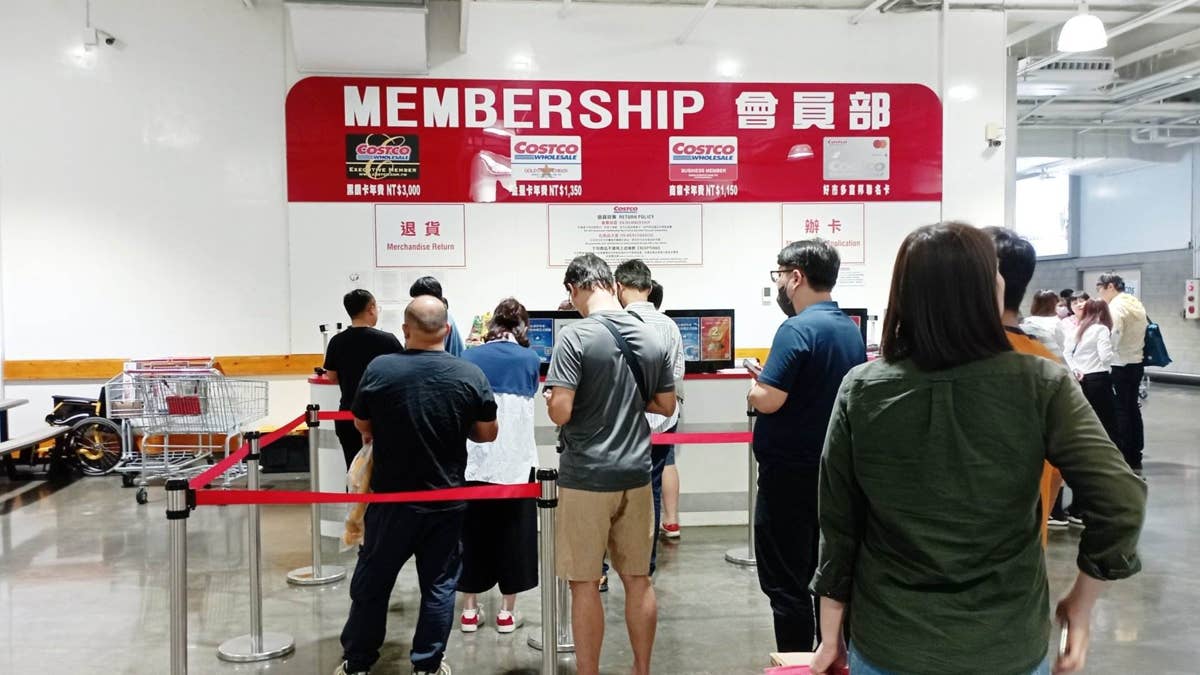
Every Costco move is about membership
But here’s the number Costco actually cares about, and it isn’t the sauna.
The sauna is bait. So is the gold, the massage chair, the Dom Pérignon, the Porsche a dealer once parked on the floor that sold out in a week. None of it has to win on its own, because none of it is the product.
“It’s the fact that it’s not necessarily the sale,” TheStreet retail advisor and RTMNexus CEO Dominick Miserandino said. “The biggest metric is their 92% membership retention rate.” The merchandise just feeds that loyalty. As he put it, “if you’re adding in more things to help their loyalty,” then “God bless.”
That’s the real sale. The shopper wheeling out the flatbed thinks he beat the system. He’ll be back next month to beat it again and so will 82 million other people.
It feels like winning. That’s exactly why it works.
Related: Beloved BBQ restaurants close as beef prices soar
