
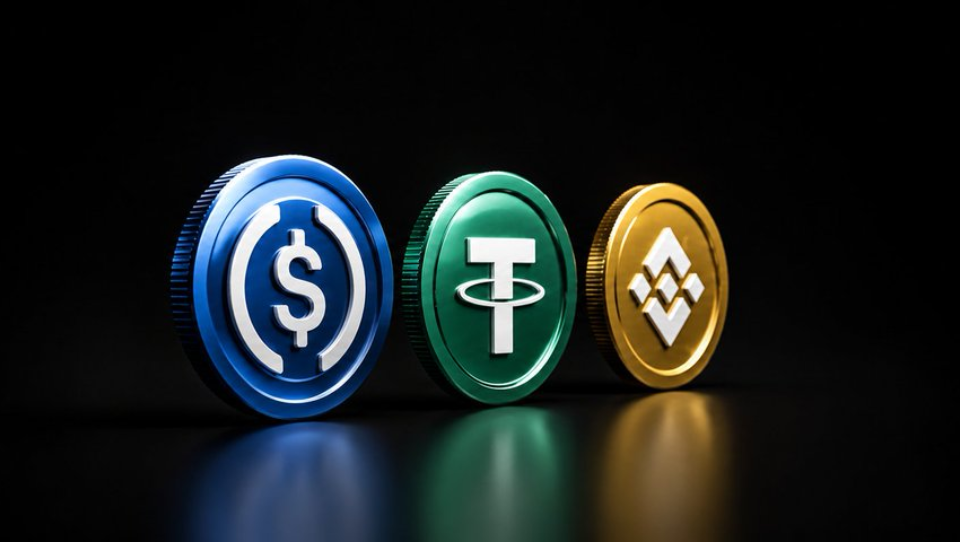
Stablecoins have become one of crypto’s most widely used tools. They let people send dollars across borders, settle payments, and hold digital assets without the wild price swings of Bitcoin or Ethereum. But even as they grow more central to the digital economy, putting that money to work across different markets is still surprisingly hard.
According to DeFiLlama, the stablecoin market was worth about $285 billion in mid-November 2026. That’s a huge amount of dollar-based capital moving across blockchains. Sending stablecoins from one wallet to another is now fairly easy, but using them to buy stocks, trade derivatives, or tap other investments is another story. It often means juggling several platforms, swapping assets, or shuffling funds between systems, and that gap matters more and more as crypto platforms look past digital asset trading and toward a broader financial system built around stablecoins.
Stablecoins Have Outgrown Their Original Job
Stablecoins first caught on as a handy way for crypto traders to move between volatile assets without cashing out to a bank. Since then, they’ve become infrastructure for payments, remittances, decentralized finance, and international settlement. The appeal is easy to see. Dollar-pegged tokens like USDT and USDC let people move value across blockchains, often without the geographic limits or business hours of traditional banking.
Things get trickier, though, once users want to do more than send or hold them. Say a stablecoin holder wants to trade crypto, buy U.S. stocks, and open a perpetual futures position. They might need three different platforms, each with its own account rules, collateral setup, supported networks, and withdrawal process. The result feels a lot like the early days of online finance, when every financial activity needed its own separate service.
Why Investing With Stablecoins Is Still Complicated
The problem isn’t a shortage of investment products. Decentralized exchanges, derivatives platforms, and tokenized asset providers have all grown a lot, giving users more ways into financial markets through blockchain rails. The problem is that these products mostly work in isolation.
A trader might use a decentralized exchange for spot crypto, a specialized protocol like Hyperliquid for perpetual futures, and yet another platform for tokenized stocks. Moving between them can mean transferring assets, paying network fees, and getting to grips with different risk models.
There’s also a real difference between owning an asset and holding a token that tracks its price. Tokenized stock products, for example, can differ in how they’re held in custody, whether they can be redeemed, and how they handle shareholder benefits. For investors used to reaching every asset class from a single brokerage account, these differences add another layer of complexity. So the next stage of stablecoin adoption may depend less on inventing new investment products and more on making the existing ones easier to reach.
A New Wave of Multi-Asset Trading Platforms
Several companies are tackling this from different angles. Kraken has moved into tokenized equities through xStocks, letting eligible users in supported regions trade blockchain-based versions of U.S. stocks and ETFs. Ondo Finance has also built tokenized financial products designed to link traditional assets with blockchain infrastructure. Meanwhile, derivatives platforms like Hyperliquid have shown there’s real demand for trading built directly on onchain liquidity and settlement.
Another approach is coming from platforms that want to bring multiple markets together around one stablecoin balance. UXUY, a decentralized exchange incubated by Binance Labs and backed by YZi Labs, is building its ecosystem around the idea that stablecoins should be a gateway to a much wider range of assets. According to DappRadar’s Q1 2025 report, UXUY’s Telegram wallet had passed 10 million users, making it the largest Telegram wallet in the world at the time.
The platform’s strategy is to make crypto, stocks, and perpetual futures easier to reach through stablecoin-based infrastructure. In October 2026, it took that a step further with UStock, a platform designed to let users subscribe to and trade assets linked to small- and mid-cap public companies using stablecoins. Instead of treating each asset class as its own separate world, the bigger goal is to make stablecoin capital usable across all of them.
It’s part of a wider shift in how crypto companies see themselves. Rather than competing only as exchanges or wallets, some are starting to look more like multi-asset financial platforms.
The Infrastructure Challenge Hasn’t Gone Away
Putting different markets in one place doesn’t make the underlying problems disappear. Tokenized stocks still have to deal with custody, investor eligibility, market liquidity, and the legal rights tied to the underlying shares. Derivatives bring their own demands around collateral, liquidations, and risk controls.
Regulation is another big factor. A product available in one country may be off-limits in another, and settling on a blockchain doesn’t remove the rules that come with trading securities or derivatives. There are technical hurdles, too. Each blockchain has its own fees, settlement process, and liquidity conditions, and making all of that feel seamless takes infrastructure that can handle the complexity without hiding important financial risks from users. For platforms chasing an all-in-one experience, convenience will have to be balanced with transparency and user protection.
From Digital Dollars to Digital Investing
The stablecoin boom has already shown that blockchains can handle massive volumes of dollar-based activity. The open question is how much of that infrastructure can support investing more broadly. As tokenized stocks, decentralized derivatives, and multi-asset platforms mature, stablecoins could become a shared settlement layer linking markets that have always run separately.
That doesn’t mean every financial product will move onchain, or that people will close their brokerage accounts. But it does suggest the line between crypto trading and traditional investing could start to blur. For the next generation of financial platforms, the opportunity may be less about convincing people to hold stablecoins and more about giving them good reasons to use the ones they already have.
The capital is already out there. Making it work across markets is the next challenge.
