
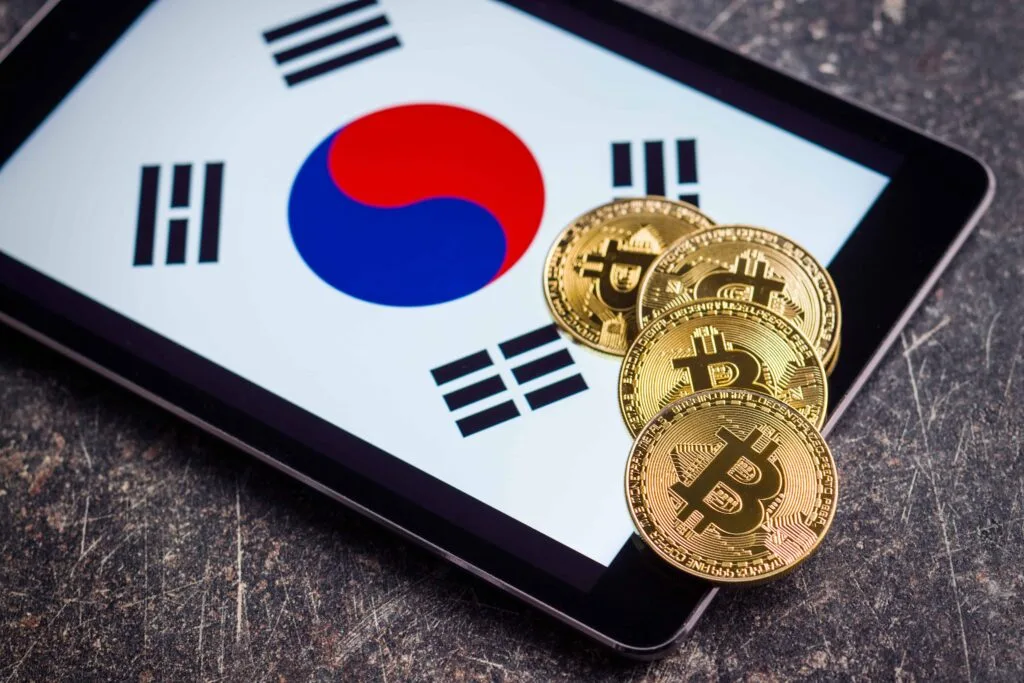
South Korean financial authorities are considering allowing regulated market-making in the country’s cryptocurrency market, potentially reversing longstanding restrictions as policymakers look for ways to improve liquidity and reduce extreme price volatility on domestic exchanges.
The Financial Services Commission is examining whether professional liquidity providers could be permitted under clearly defined conditions as part of South Korea‘s next phase of digital-asset regulation, according to local reports.
The proposal would distinguish legitimate market-making — continuously posting buy and sell orders to provide liquidity — from practices such as wash trading, spoofing and coordinated price manipulation.
Those manipulative activities would remain prohibited. South Korea has historically taken a restrictive approach toward formal crypto market-making arrangements because regulators have been concerned that exchange-affiliated or issuer-funded trading could distort prices, create artificial volume or disadvantage retail investors.
The reconsideration reflects a different concern: prohibiting professional liquidity provision can itself contribute to thin order books and abrupt price movements, particularly for smaller digital assets.
Regulators Examine Controlled Market-Making
A regulated framework could allow designated market makers to provide continuous bids and offers while subjecting their activities to disclosure, monitoring and conflict-of-interest requirements.
Market makers play a standard role in traditional securities markets. By quoting prices on both sides of an order book, they can narrow bid-ask spreads and make it easier for investors to execute trades without substantially moving market prices.
Crypto markets present additional complications because tokens can trade continuously across numerous domestic and offshore venues.
South Korean exchanges have previously experienced substantial price differences from international markets, a phenomenon commonly known as the “Kimchi premium.” Restrictions on cross-border capital movement and the country’s heavily retail-driven trading environment can make arbitrage between Korean and overseas exchanges more difficult.
Allowing professional liquidity providers could deepen domestic order books and reduce some short-term pricing dislocations, although it would not eliminate structural differences between Korean and international markets.
Any change would sit alongside South Korea’s Virtual Asset User Protection Act, which took effect in July 2024.
The law established rules covering customer-asset protection and unfair trading practices, including the use of undisclosed material information, market manipulation and fraudulent transactions.
South Korea Builds Second-Stage Crypto Rules
The market-making discussion forms part of a broader overhaul of South Korea’s digital-asset framework.
Authorities have been developing a second-stage legislative regime following the first Virtual Asset User Protection Act, with policy discussions covering stablecoins, token issuance, exchange operations and rules governing crypto businesses.
South Korea is a particularly significant market for such reforms because cryptocurrency participation is widespread and trading volumes on major domestic exchanges can periodically rival those of the country’s equity markets.
Regulators therefore face a trade-off between increasing market efficiency and ensuring that liquidity programs do not become mechanisms for artificial volume or price support.
Formalizing market making could also make the relationship between token issuers, exchanges and professional trading firms more transparent.
Instead of informal or undisclosed arrangements, regulators could require qualifying liquidity providers to operate under standardized rules governing inventory, trading conduct, reporting and conflicts of interest.
The policy remains under consideration, meaning South Korea has not yet broadly legalized crypto market making under a finalized new regime.
The eventual rules will determine which firms can participate, whether issuers can finance liquidity arrangements, what disclosures are required and how exchanges must supervise activity.
What has changed is the regulatory premise. Rather than treating professional market making primarily as a potential source of manipulation, policymakers are considering whether tightly supervised liquidity provision could make South Korea’s crypto markets deeper, less volatile and more resilient — while retaining strict penalties for trading intended to manipulate prices or fabricate demand.
