
The best technology disappears. You stop noticing it, and then you start relying on it.
For a decade, virtual reality asked you to strap a bulky headset to your face and accept the trade-off. That trade-off kept most shoppers out of the category, even as phones and earbuds became things people carried everywhere.
Glasses changed the math. Smart frames look like ordinary eyewear, cost a few hundred dollars, and ask for very little change in habit, and they now make up most of the extended reality (XR) market, according to International Data Corporation (IDC) data.
Tech companies know this, and they spend every fall convincing you that this year’s model is the one worth your money. Most years the honest answer is to wait. Some years the price tells you more than the specs do.
Now, Meta Platforms (META) is asking you to pay up for the next step.
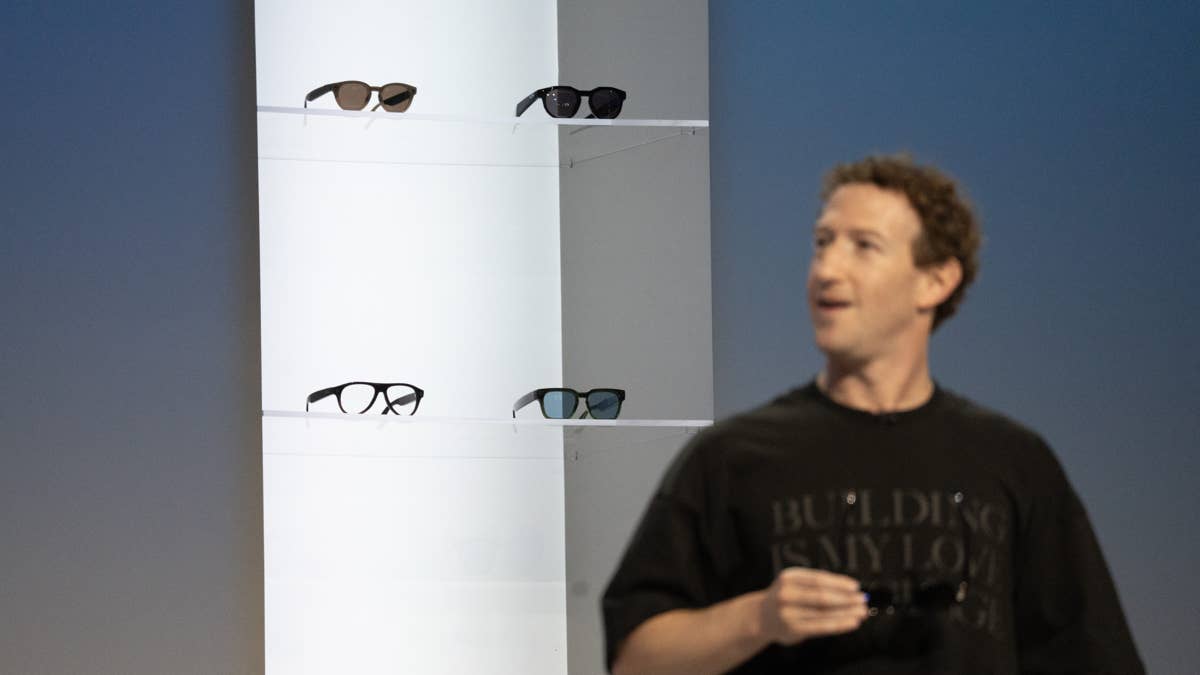
At its Connect event on Sept. 23, Meta unveiled VR glasses that cost $1,299, weigh about 100 grams and ship in spring 2027. It also introduced Ray-Ban Meta Audio, a $349 pair of smart glasses with no camera, according to the company’s announcement.
What Meta’s $1,299 VR glasses actually deliver
Meta’s VR glasses weigh about 100 grams, use a 5K display with full-color passthrough, and run up to three hours of continuous playback, according to Engadget. The computing happens in a separate puck tethered to the glasses, which carries a Snapdragon Reality Elite chipset.
In my read of the specs, the three-hour battery is the detail to weigh before you spend $1,299. A movie fits inside that window, but a full workday in a virtual desktop does not.
More Technology:
- JPMorgan sends strong message to Meta stock investors
- Qualcomm CFO says look beyond the Apple deal
- Hilton CEO calls the rise of Al ‘unstoppable’
The glasses are IMAX Enhanced certified and work with Xbox Cloud Gaming. About 75 games will be available at launch, Engadget reported.
Meta CEO Mark Zuckerberg framed the launch as a shift in priorities. Meta decided to focus “a little bit less on metaverse for now” and build fewer VR devices, he said, according to Fortune.
Bloomberg / Getty Images
Zuckerberg’s jab at Apple Vision Pro’s weight
Zuckerberg made the comparison himself on stage. He said the new glasses are “much lighter than Vision Pro,” according to Engadget’s live blog.
The price gap is just as stark. Fortune put Apple’s Vision Pro at around $3,700 and called Meta’s launch a clear shot at Apple, whose headset it said has struggled with consumers because of its size, weight, and cost.
At $1,299, Meta’s pair costs roughly a third as much.
Related: Bank of America backs Meta stock after Muse surprise
Engadget’s Devindra Hardawar went further and called the glasses a true successor to the Vision Pro. Meta’s pair is aimed at the same buyer with a far smaller frame and price tag.
The comparison comes with fine print. The 100 grams covers the glasses only, and the separate computing puck adds to what you carry, Engadget noted. Meta’s field of view is 70 degrees against 100 degrees for Vision Pro, which weighs 1.3 to 1.7 pounds.
In my read, that trade-off explains the price. You give up some immersion and get a device you might actually wear, so the question for your wallet is whether lighter and cheaper beats wider and sharper.
Why a camera-free VR glasses model matters at $349
Ray-Ban Meta Audio starts at $349, weighs 43 grams, and has no camera, according to Meta’s announcement. The company says it lasts up to 12 hours on a charge, with another 48 hours from the charging case, and it ships Oct. 13.
The camera is what you pay for elsewhere in the lineup. Ray-Ban Meta Gen 3 starts at $449, adds a 12-megapixel camera and offers nine hours of battery, up from eight, BestInXR reported. The entry-level Meta Adventurer starts at $249 and ships Oct. 23.
That leaves a $100 gap between the camera and camera-free models. For some buyers, that gap is the whole decision.
Privacy has followed Meta’s glasses all year, and TheStreet reported in July on concerns about always-on features. Tom’s Guide noted that Meta said very little at Connect about those issues.
Price ladder from $249 to $1,299 at a glance
- Meta Adventurer: From $249, ships Oct. 23
- Ray-Ban Meta Audio: From $349, no camera, ships Oct. 13
- Ray-Ban Meta Gen 3: From $449, on sale now
- Meta Ray-Ban Display: From $799 in the U.S.
- Meta VR glasses: $1,299, ships in spring 2027
- Hearing Enhancement software: $149 one time, or included with a Meta One subscription
- Source: Engadget
Meta already leads glasses with 68.7% share
Meta shipped 68.7% of smart glasses in the second quarter, according to IDC data reported by Mixed. RayNeo was next at 3.6%, followed by Alibaba at 2.6%.
Glasses made up 84.6% of XR shipments, up from 72.9% a year earlier, while headsets fell to 15.4% from 27.1%, IDC said. Glasses without displays alone were 70.3% of shipments.
That helps explain the camera-free model. The category’s biggest segment is glasses with no display, and Ray-Ban Meta Audio sits squarely inside it.
IDC analyst Jitesh Ubrani attributed slower growth to tougher comparisons and a pause between product cycles, not fading interest, Mixed reported. He expects a rebound after upcoming launches.
How shares reacted and what analysts said
Meta stock closed at $744.10 on Sept. 23, up 1.02%, before the keynote ran after the bell, according to FinanceFeeds. Shares slipped 0.4% in after-hours trading, Yahoo Finance reported.
“Muse over Metaverse is a good thing for META investors,” Evercore ISI’s Mark Mahaney said, according to Yahoo Finance.
Deepwater Asset Management’s Gene Munster expected shares to be “flat to down” after the keynote, Benzinga reported. He cited little data on adoption of Meta’s Muse AI agent.
Meta did not disclose glasses unit sales at Connect, BestInXR noted. In my analysis, that leaves investors weighing price and timing without sales data.
Ship dates to plan your VR glasses purchase around
Two dates matter first. Ray-Ban Meta Audio ships Oct. 13, and the Meta Adventurer ships Oct. 23.
The $1,299 VR glasses are the long wait. Meta says spring 2027, and that leaves months for prices, rivals, and your own budget to change.
A $1,299 promise is easy to make in September. It gets tested when the boxes ship, and that is when your wallet gets its vote.
Related: Amazon blocks Meta’s Muse but Shopify opens the door
