
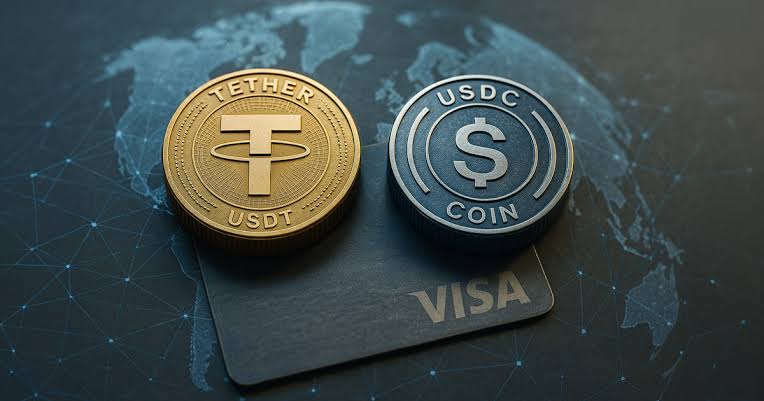
The Trump administration is considering a government-backed effort to expand the use of U.S. dollar stablecoins overseas, potentially turning digital dollars into a tool for reinforcing both the dollar’s global dominance and demand for U.S. Treasury securities.
Officials are discussing supporting overseas stablecoin projects through joint ventures with private-sector companies, Bloomberg reported on September 23, citing people familiar with the deliberations. The Treasury Department and State Department could participate, while the U.S. International Development Finance Corporation, or DFC, is also being considered.
The proposal remains preliminary. No participating companies, target countries, funding amounts or implementation timetable have been disclosed, and the administration has not formally announced the initiative. Treasury and the White House did not respond to Bloomberg’s requests for comment, while State and DFC declined to comment.
Stablecoin Growth Creates Automatic Treasury Demand
The economic mechanism behind the proposal is relatively straightforward. Dollar stablecoins generally maintain their $1 value by holding reserve assets. Under the GENIUS Act, U.S.-regulated payment stablecoins must maintain at least one-to-one reserves using permitted assets including dollars, deposits, short-term Treasury securities and Treasury-backed instruments.
Consequently, expanding stablecoin circulation can generate additional demand for Treasury bills.
Treasury Secretary Scott Bessent explicitly connected the two when the GENIUS Act became law in July 2025, saying stablecoins could expand access to the dollar economy globally while producing a surge in demand for Treasuries backing those tokens.
Federal Reserve Bank of Richmond researchers reached a similar conclusion in March. Their analysis found that reserve-backed stablecoins increase demand for U.S. Treasuries and could strengthen rather than weaken the dollar’s international position, depending on how the tokens are structured.
Stablecoins already exceed $300 billion in circulation, according to a recent White House analysis, meaning the reserve portfolios behind them have become a meaningful source of demand for short-duration government debt.
Washington Turns Stablecoins Into Geoeconomic Infrastructure
An overseas initiative would expand that logic beyond domestic crypto regulation. Rather than simply allowing private issuers to distribute digital dollars internationally, Washington could potentially use government agencies and development-finance capabilities to support infrastructure that makes dollar stablecoins easier to access in foreign markets.
DFC is particularly notable because its mandate combines private-sector investment with U.S. foreign-policy objectives. The agency says its mission includes advancing U.S. foreign-policy goals while supporting economic development among allies and partner countries.
The proposal also comes as competing digital-payment systems develop internationally.
China’s digital yuan participates in Project mBridge, a cross-border central-bank digital-currency platform, while the European Central Bank continues work on the digital euro and infrastructure connecting tokenized markets with European payment systems.
Stablecoins offer Washington a fundamentally different approach. Instead of issuing a U.S. retail central-bank digital currency, private companies can distribute dollar-denominated tokens while reserve requirements channel part of the resulting demand back into dollar assets and Treasury securities.
The administration is already implementing the regulatory foundation. Treasury issued proposed GENIUS Act rules in August and expects key provisions governing U.S. payment-stablecoin issuance to take effect beginning January 18, 2027.
If the overseas initiative proceeds, stablecoin policy would therefore move beyond domestic crypto regulation. Washington would effectively be testing whether privately issued digital dollars can become an instrument of financial statecraft — extending dollar usage into global digital payments while simultaneously creating another buyer base for U.S. government debt.
