
Before the Covid pandemic, I visited Target at least once a week, went grocery shopping every weekend, if not more often, and sometimes went to Costco just to walk around.
Now, while I still visit stores, I’m much more likely to place an Amazon order for non-perishables, while using Instacart and Uber Eats for things I used to buy at grocery stores.
There’s no reason to leave the house if I know what I want, and when I can have most things delivered in under an hour. Uber Eats will bring me items from Target, Publix, and ABC Liquors, which pretty much covers the products I’m likely to need.
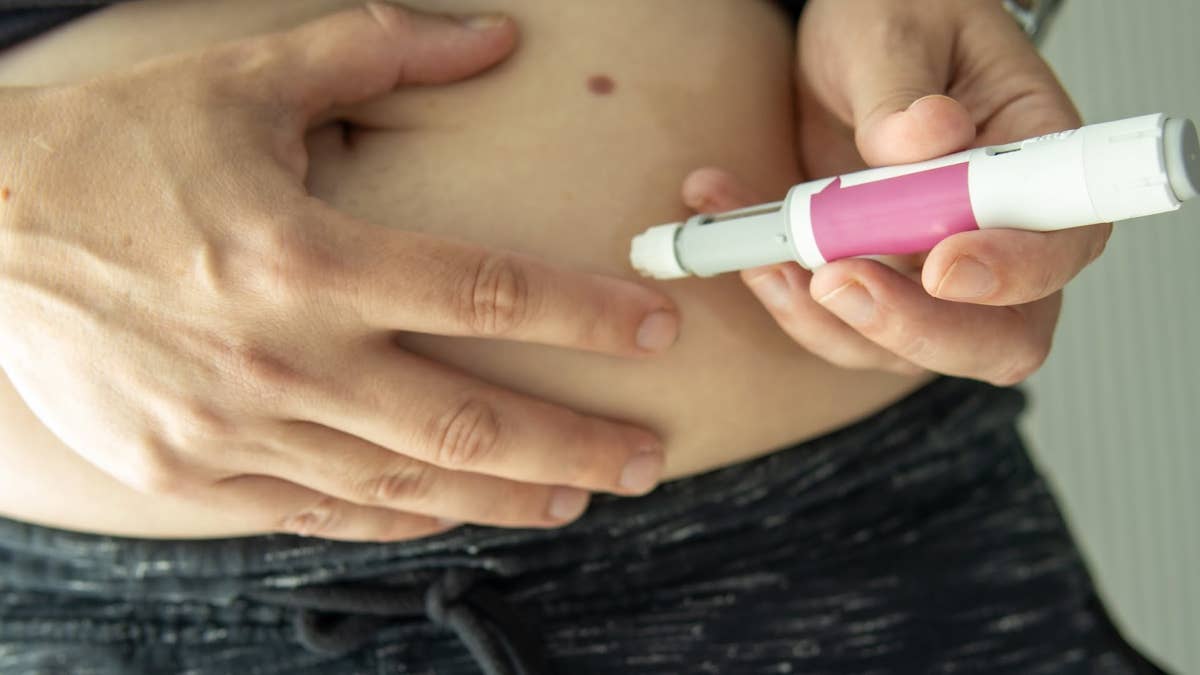
Those delivery services, however, will not bring me my GLP-1 prescription. Currently, I do get my monthly supply of tirzepatide by mail through Noom, but Costco, Walmart, and CVS all offer the drug for less than I’m paying.
They also have programs in place designed to drive consumers to their stores to pick up their medicine, and hopefully, some groceries, clothes, and who knows what else.
Costco, Walmart, and CVS want GLP-1 customers
My insurance does not cover my GLP-1 prescription, and I opted to get it through Noom because a friend recommended it. Some people who take one of these drugs for weight loss used to get it through their employer-provided insurance plan, but that has been changing.
“Employers are dropping coverage for GLP-1 drugs like Wegovy and Zepbound in greater numbers, nudging more patients to direct-to-consumer prescription programs, and providing Walmart, Costco, CVS, and Amazon the opportunity to gain a greater share of the market,” CNBC reported.
More Retail:
- Dollar General copies Costco’s playbook with a discount twist
- Pepsi and Coca-Cola bet big on soda Americans say they want
- Iconic supermarket chain closes more stores and facilities
All three retailers have partnerships designed to entice customers to get their prescription filled at a brick-and-mortar store.
“Retailers are betting that if they can become the front door for obesity care, they’ll earn a relationship that extends far beyond a single GLP-1 prescription,” Eric Bormel, managing director specializing in digital healthcare at Solomon Partners’ healthcare group, told CNBC.
Costco, Walmart, and CVS all offer GLP-1 programs
Each of the three retailers has created its own way to market GLP-1 dugs to customers.
- Walmart’s Better Care Services connects customers to curated third-party providers alongside pharmacy services. The platform now includes weight management support services for customers on or exploring GLP-1 therapies through Walmart’s nearly 4,600 pharmacies nationwide, according to the retailer.
- In addition, Walmart has partnered with Eli Lilly and Company to expand access to direct-to-consumer pricing for Zepbound (tirzepatide) single-dose vials available through LillyDirect. Zepbound vials will be offered for pickup at Walmart pharmacies nationwide by mid-November. LillyDirect’s direct-to-consumer pricing offers a 50% or greater discount compared to the list price of other GLP-1 medicines for obesity, according to a press release.
- Costco has partnered with Sesame to offer specialized health care for weight loss with pricing exclusively for its members. When Costco Members sign up for the weight loss program within the Sesame marketplace for $179 a month, they receive three months of clinical consultation and, assuming they qualify under medical guidelines, the appropriate GLP-1 prescription, according to a press release.
- CVS expanded its GLP-1 offerings in June. New offerings include expanded pharmacy support designed to help patients access these treatments and stay on them, and a new $49 MinuteClinic virtual visit that connects eligible adults with licensed clinicians who can evaluate and, when clinically appropriate, prescribe GLP-1 therapy, the company shared in a press release.
Roughly 40% of US adults are obese (defined as a body mass index above 30), comprising 108 million Americans, according to the Centers for Disease Control.
GLP-1 medications require ongoing management, which creates a recurring relationship between patients and health care providers. That makes pharmacy a valuable touchpoint for retailers.
“Since we’re seeing so many drugs that are beneficial in different areas like obesity, heart disease, kidney disease, liver disease, that type of thing, we as health professionals — doctors, nurses, nutritionists, pharmacists — we need to look at the patient as a whole,” pharmacist Staci-Marie Norman told Drug Topics.
Shutterstock
GLP-1 use has dragged down grocery sales
Multiple recent surveys have shown that GLP-1 users are spending less at grocery stores.
Numerator’s latest quarterly GLP-1 usage tracker, which was shared with Grocery Dive, showed that more people are taking these drugs and that this has curbed their grocery-store spending. The findings include:
- Twice the number of households (22%) now have a current GLP-1 user as compared to October 2023.
- The firm’s research also found that grocer spending has declined among GLP-1 users, compared with similar households not using GLP-1 medications after one year.
Walmart CEO John Furner also acknowledged the decline in purchases by GLP-1 users.
“We definitely do see a slight change compared to the total population. We do see a slight pullback in the overall basket. Just less units, slightly less calories,” he told Bloomberg.
Retailers, however, have an opportunity with GLP-1 sales.
“Despite households using GLP-1 medications spending nearly 4% less at the grocery store compared to similar households not using the medication, grocers should still work to appease these consumers as they account for more than $660 billion in consumer spending across CPG, general merchandise and quick-service restaurants,” according to Numerator.
Costco, Walmart, and CVS want more sales
Costco, Walmart, and CVS may lose some food sales because consumers take GLP-1 drugs, but they are seeking to make that up in other areas. Each retailer is using GLP-1 access to create more frequent customer touchpoints, including pharmacy visits, virtual care, and store trips.
“GLP-1 obesity drugs are not only transforming waistlines; they are reshaping retail apparel, food and wellness,” according to the National Retail Federation’s (NRF) 10 trends and predictions for retail in 2026. “…In apparel, retailers are adjusting inventory in effort to do a better job of size assortments.”
People who lose weight on these drugs need new clothes and are more likely to shop in stores, according to analysts, because they want to try things on.
“It has the potential to at least slow the flight to purely online,” Don Johnson, a consumer strategist at EY-Parthenon, told Reuters. “You have to be more thoughtful about the in-store experience.”
Retailers are struggling to adjust to the changing demand.
“Clothing brands typically place orders six to nine months in advance and use size curves to determine how many of each size (0, 2, 4, etc.) they want to include in a given assortment. The brands typically adjust these algorithms once a year,” PwC retail leader Kelly Pedersen told Modern Retail.
But now, as more people use GLP-1 drugs, brands are updating these models “more often than they have before” to meet the need for small sizes, Pedersen said.
For chains like Costco, Walmart, and CVS, the opportunity is significant.
“The retailer that fills the prescription tends to sell the groceries too, and pharmacy is quietly becoming the membership battleground of American retail,” Jackie Swanson, managing partner at Gartner Consulting, told CNBC.
RTM Nexus CEO Dominick Miserandino thinks these retailers are being smart about how they manage the GLP-1 boom’s impact.
“Look, everybody’s freaking out because someone on GLP-1s spends 4% or 5% less on chips and bakery goods. But Walmart, Costco, and CVS aren’t stupid — they know a trade-off when they see one,” he told TheStreet.
It’s a trade-off on which the retail chains can come out ahead, he added.
“They might lose fifty bucks a month on a customer’s snack budget, but if you become the pharmacy where they pick up their prescription, you’ve got them walking through your doors every single month. They aren’t just buying less food. They’re buying high-margin items like protein shakes, vitamins, supplements, and wellness products to go along with it,” he shared.
Related: Kroger makes a pricing move Costco and Walmart will love
