
Back when my wife and I lived in Connecticut, our house was maybe three miles from a Costco that itself wasn’t near much except for Target. To get there, we passed at least three gas stations, and if we went in the other direction, there were two within a mile of our house.
Costco, of course, always had the best prices, but unless I was planning on shopping at the warehouse club, I had to factor in not just price, but the value of my time.
The chain’s CFO Gary Millerchip concedes that Costco is generally not the closest gas station for members, so they have to weigh the value of making that extra trip.
“When prices are higher, that will tend to cause members to maybe take the extra mile that it might involve to get to the gas station because of the incremental value they see there,” Millerchip said during the chain’s second-quarter earnings call.
The warehouse club, however, has quielty made a move that may have 7-Eleven, Circle K, Casey’s General Stores, Murphy USA, and BP America, the five largest gas station/convenience store chains in the U.S., according to CSP Daily News, at least a little bit concerned.
Costco gas station plan has been simple
Traditionally, Costco uses low-priced gas as a way to drive members to its warehouse clubs and that has been an effective tactic, according to Millerchip.
“Generally speaking, we see about half of members that will shop at the gas station will also cross-shop at the warehouse,” he said.
And, while Costco has no set discount or specific amount of savings it wants to offer customers, it’s consistently cheaper than rivals.
“You save approximately 20 cents a gallon at Costco over other local vendors,” David Schwartz, who, with his wife Susan, authored “The Joy of Costco,” told CNBC. “That’s something we have seen time and time again across the country.”
Shutterstock
Costco changes its gas station model
Gas makes up about 10% of total Costco sales, according to the company’s annual report.
Costco has long treated gasoline as a membership benefit rather than a major profit center. Because the company earns billions annually from membership fees, it can afford to keep fuel margins thinner than many traditional convenience-store chains.
Costco takes its gas value proposition very seriously.
“Generally speaking, if gas prices start to increase, then we tend to see our value proposition resonate better with members, just because obviously we want to be the pricing authority on gas,” Millerchip said during the earnings call.
The standalone stations suggest Costco may also be exploring another role for fuel, bringing its value proposition closer to members who don’t live near a warehouse.
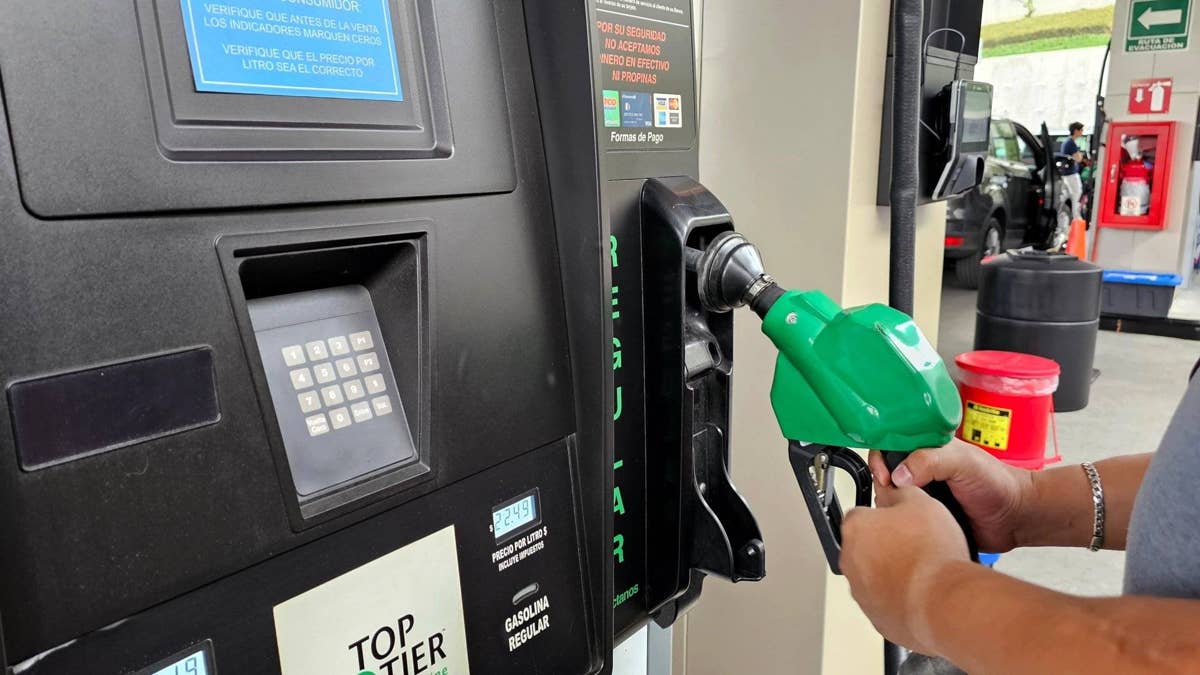
Costco has opened a new standalone gas station in Mission Viejo, California, C-Store Dive reported.
“Regardless of Costco’s long-term plans for standalone gas stations, the new Mission Viejo location will almost certainly put pressure on nearby convenience retailers, which are unlikely to match the wholesaler’s aggressive fuel pricing,” the news site shared.
According to Costco’s website, the station is selling regular gasoline for $4.59 per gallon — roughly 71 cents below the Orange County average, according to AAA.
Costco also has plans to open a second stand-alone gas station in Hawaii, but the company has not commented on its overall plans in this area.
Retail analysts say that if Costco expands its standalone gas strategy, competing chains may feel pressure to narrow fuel margins in order to remain competitive.
Costco’s standalone gas station offers a 17,185-square-foot gas canopy with 40 fueling positions and is only accessible to Costco Warehouse members, according to a filing with Mission Viejo.
Costco is being aggressive on gas
Costco has been working on fully optimizing its fuel operations.
“We’re now in the process of deploying AI tools in our gas business, which we expect will improve inventory management and drive incremental sales by ensuring we are always delivering the best value to our members,” CEO Ron Vachris said during Costco’s first-quarter earnings call.
Pricing is a significant factor in how consumers decide where to buy gas.
“Gas price is the top reason a driver selects a specific retail fueling location to fill up. Overall, 72% of all drivers say price is the most important factor, compared to 16% who cite location and 12% who cite brand, according to a 2025 NACS Consumer Fuels Survey. The same survey found that 69% of drivers said they would drive 5 minutes out of their way to save 5 cents a gallon,” The NACS reported.
That means that, at least when gas prices are high, the combination warehouse-based gas stations and standalone, should that fleet grow, could give Costco a reach that’s bigger than its footprint.
RTM Nexus CEO Dominick Miserandino thinks that Costco may add more standalone gas stations, but won’t deviate too far from its current formula of using discount fuel to drive store visits.
“Gas isn’t a profit center for the clubs. It’s a high-octane magnet. Think about it: If you’re already sitting in a 15-minute line to save $0.30 a gallon, you’ve already committed the time. You’re in the ‘Costco headspace.’ Once you finish at the pump, your brain says, ‘I’m already here, I might as well grab the $5 chicken and a 30-pack of paper towels,’” he told TheStreet.
Miserandino also shared that at the end of the day, Costco wants members to renew and that putting standalone gas stations in select areas may drive that.
“Their revenue is from membership. I mean they do care if you enter the warehouse or you won’t keep renewing, but they value and want that annual recurring revenue from membership,” he added.
Related: Costco quietly makes key credit card change
