
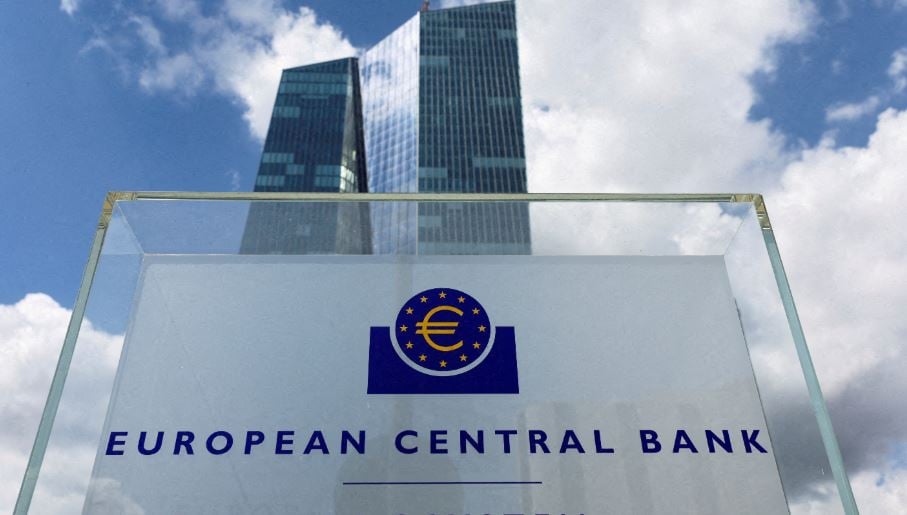
The European Central Bank has confirmed that banks will be permitted to use digital tokenised assets as collateral in Eurosystem credit operations starting in March 2026, marking a major milestone in the integration of distributed ledger technology into Europe’s financial system. The decision reflects a growing recognition among central banks that tokenisation is becoming an increasingly important component of modern capital markets.
Under the revised framework, certain marketable assets issued in tokenised form will be treated in the same way as traditional securities, provided they meet existing eligibility and risk management standards. The change will allow banks to pledge qualifying digital assets when accessing central bank liquidity, bringing tokenised instruments closer to mainstream acceptance within regulated financial infrastructure.
Modernising the euro area collateral framework
The ECB’s move forms part of a broader effort to modernise its collateral and settlement systems while preserving financial stability. Initially, only tokenised securities issued and settled through recognised central securities depositories will be eligible. These assets must also be compatible with the Eurosystem’s settlement infrastructure, ensuring that digital issuance does not compromise operational resilience or legal certainty.
By taking a phased approach, the ECB aims to balance innovation with caution. Accepting tokenised assets through existing post-trade frameworks allows the central bank to support technological progress without introducing new systemic risks. It also provides banks and issuers with regulatory clarity as they explore digital issuance of bonds and other marketable instruments.
The decision builds on several years of experimentation and analysis by European authorities, including pilot programmes examining the use of distributed ledger technology for wholesale settlement. Tokenisation has been promoted as a way to improve efficiency, transparency, and programmability in financial markets, though its adoption has been constrained by uncertainty over regulatory treatment and central bank recognition.
Implications for banks and capital markets
Allowing tokenised assets to be used as collateral could have significant implications for banks and capital markets across the euro area. Central bank eligibility is a key benchmark for asset quality, and inclusion in the collateral framework may encourage greater issuance and secondary market activity in tokenised securities.
For banks, the change offers greater flexibility in liquidity management and could reduce the cost of adopting new digital issuance models. For issuers and infrastructure providers, it provides a strong signal that tokenisation is moving beyond experimentation toward institutional-scale deployment.
The ECB has indicated that this step is not the final stage of its work in this area. Authorities are continuing to assess whether assets issued and settled entirely on distributed ledger platforms, outside traditional securities depositories, could eventually be incorporated into the collateral framework. Any such expansion would depend on further legal and operational developments.
As central banks globally examine how digital technologies intersect with monetary policy and financial stability, the ECB’s decision positions the euro area at the forefront of regulated tokenisation. By opening the door to digital assets within its collateral system, the ECB is laying the groundwork for a more technologically integrated future for European financial markets.
